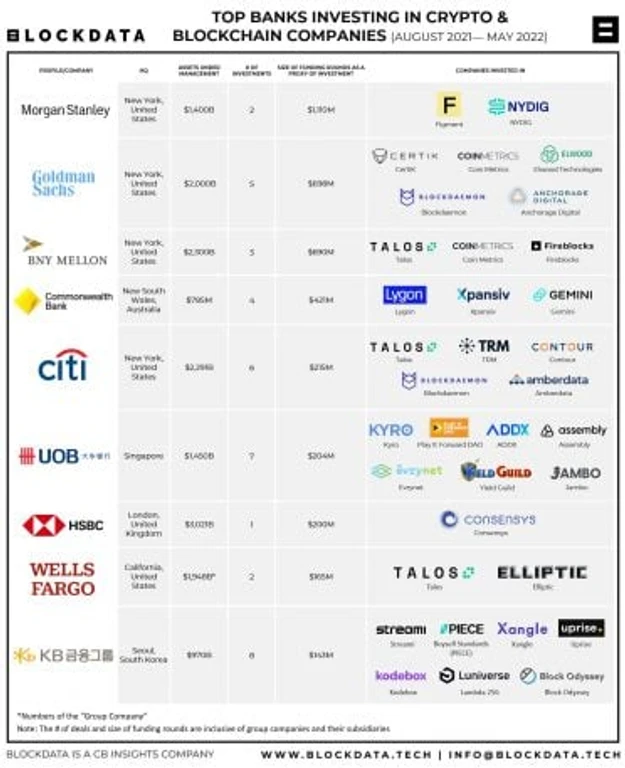
Bitwise has ranked traditional banks with the widest cryptocurrency exposure, and the top names are less fintech disruptor and more Davos guest list. BNY Mellon and JPMorgan Chase, collectively holding the gravitational center of global finance, lead across trading, payments, ETFs, and tokenization.
BNY Mellon, the world’s largest custodian bank with roughly $59 trillion in assets under custody, has made aggressive moves. It announced plans to launch Bitcoin custody services in Abu Dhabi on May 7, 2026, and it holds, transfers, and issues digital currencies on client demand. A crown jewel is its role servicing the iShares Bitcoin ETP (IB1T), which hit approximately $100 billion in assets under management in Q4 2025, making it the fastest-growing ETP in history.
JPMorgan Chase has taken a different but equally ambitious path, building blockchain infrastructure through its Onyx division, exploring tokenization of traditional assets, and maintaining one of the most active institutional crypto trading desks on Wall Street.
Spot Bitcoin ETFs launched in the US, creating an immediate need for institutional-grade custody and settlement. The UAE has positioned itself as a crypto-friendly jurisdiction, and global banks are racing to establish footholds there.
For investors, BNY Mellon’s custody business generates fees based on assets held. Bitwise’s ranking also exposes concentration risk: if the institutions with the broadest crypto exposure are deemed “too big to fail,” crypto’s integration into traditional finance creates new systemic linkages. A severe crypto downturn could ripple through custody, trading, and ETP businesses of the world’s largest banks.