
Security exploits are weighing on institutional appetite for decentralized finance (DeFi), even as broader crypto adoption continues through stablecoins and tokenized assets.
In an April research note, JPMorgan analysts said that bridge security remains a challenge for the industry, raising questions on whether DeFi can grow to support further institutional adoption.
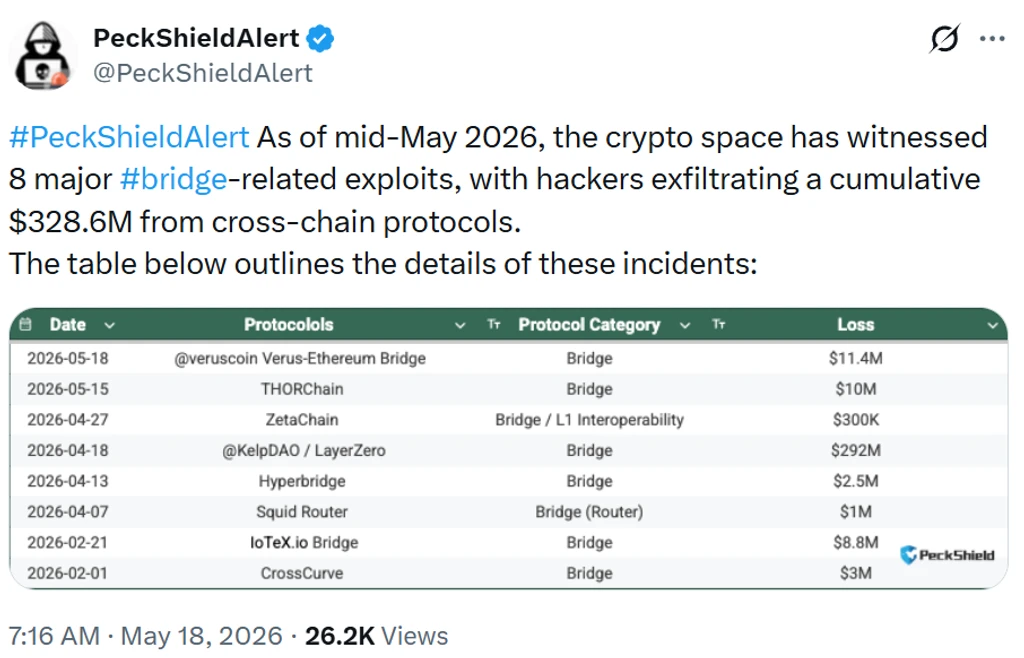
The recent exploit on the Versus-Ethereum bridge was the eighth major attack against DeFi bridges in 2026 so far, with cumulative losses totaling $328.6 million.
Misha Putiatin, CEO of security firm Statemind and co-founder of DeFi protocol Symbiotic, said he regularly fields calls from major institutions exploring DeFi, often with bad timing.
"Five minutes before I have a call with a big traditional institution, another big hack," he said. "They sit there looking at me like, 'Is this normal? Is this every day for you?'"
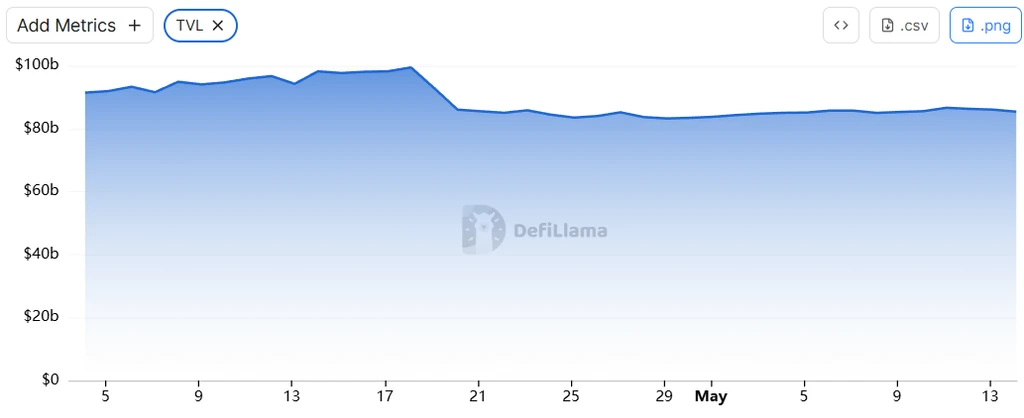
North Korea's Lazarus Group was implicated in a $285 million Drift Protocol exploit in April, carried out through months of social engineering. The same actors were blamed for the KelpDAO breach weeks later, which drained $290 million. Total value locked across DeFi fell to around $86 billion from just under $100 billion in two days.
Putiatin said the complexity of modern DeFi makes it nearly impossible for users to understand their risk exposure. "Do your own research doesn't work anymore," he said.
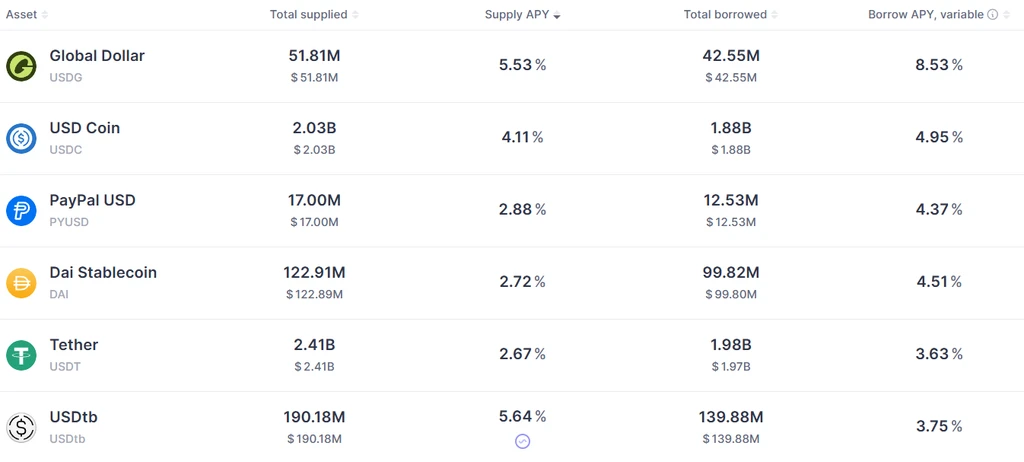
Tether (USDT) offers a supply APY of 2.74% on Aave's Ethereum market, below the 3.57% available on a three-month US Treasury bill. Circle’s USDC (USDC) fares better at 4.14%.
Putiatin noted that institutions cannot price hack risk accurately, so they discount the yield heavily. DeFi yields have compressed, eroding the premium that once justified the risk.
His benchmark for change is an onchain insurance system capable of underwriting hack risk across the ecosystem. "When we have circuit breakers, curators that can do due diligence, and a framework for that - we will get the fourth one that we desperately need as an industry. We will get insurance."