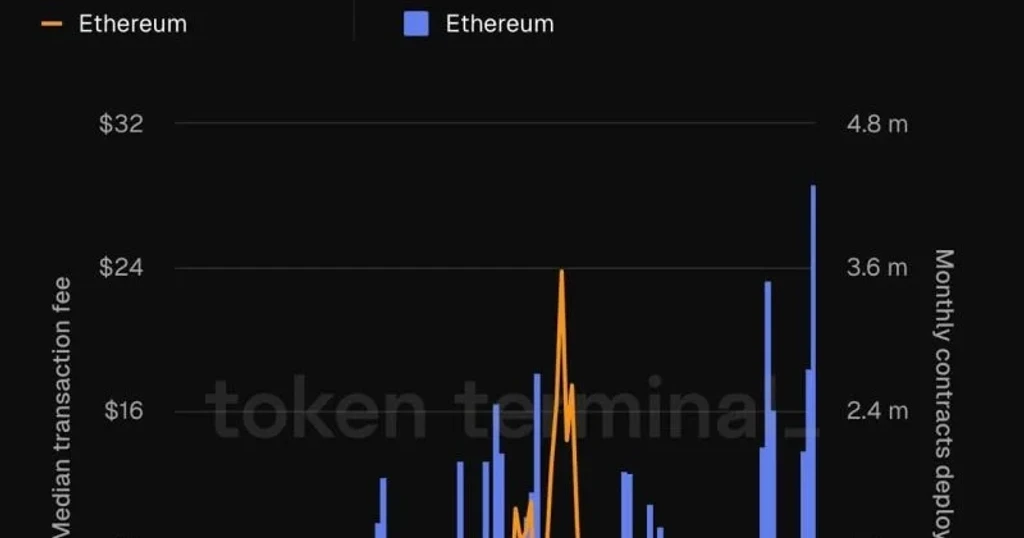
Ethereum’s Layer 1 network set a new record on December 31, 2025, processing 1.87 million daily transactions-surpassing the peak of 1.61 million from May 2021. Yet average transaction fees have dropped to around $0.21, with some periods seeing fees as low as $0.15, a drop of over 50% year-over-year.
The Dencun upgrade, implemented in March 2024, broke the traditional link between activity and fees. By introducing proto-danksharding via EIP-4844, it created a dedicated low-cost layer for Layer 2 rollups to post data. Networks like Arbitrum, Optimism, and Base now process transactions much cheaper, reducing congestion on the main chain.
Quarterly transaction volume tells the broader story. Q1 2026 logged a record 200.4 million transactions on Ethereum L1. Active addresses hit all-time highs alongside transaction volumes as far back as October 2025.
However, the drop in fees has created a dilemma. Since the Merge in September 2022, Ethereum has burned a portion of each transaction fee, removing ETH from circulation. But with fees so low, daily ETH burned has hit all-time lows, some days only 53 ETH-a sharp contrast to the thousands of ETH burned daily during 2022 and 2023.
For investors, this is a double-edged sword. Lower fees drive adoption, more users, and more transactions. But the economic value is increasingly captured by Layer 2 networks, not Ethereum's main chain. Ethereum L1 collects only a small settlement fee, a fraction of what it earned when all activity took place on mainnet.