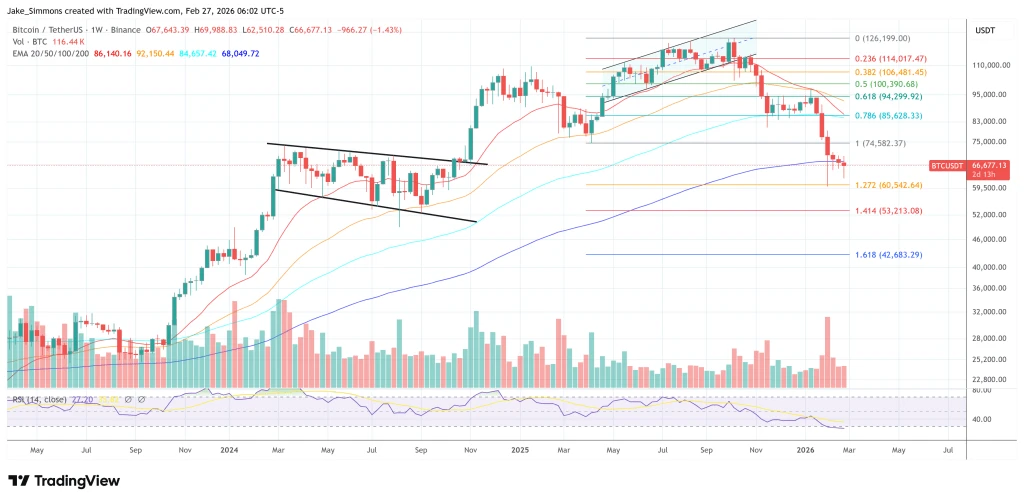
Fidelity Digital Assets believes Bitcoin's market structure has fundamentally shifted, suggesting the familiar four-year boom-bust cycles and their characteristic 80% drawdowns may be a relic of the past.
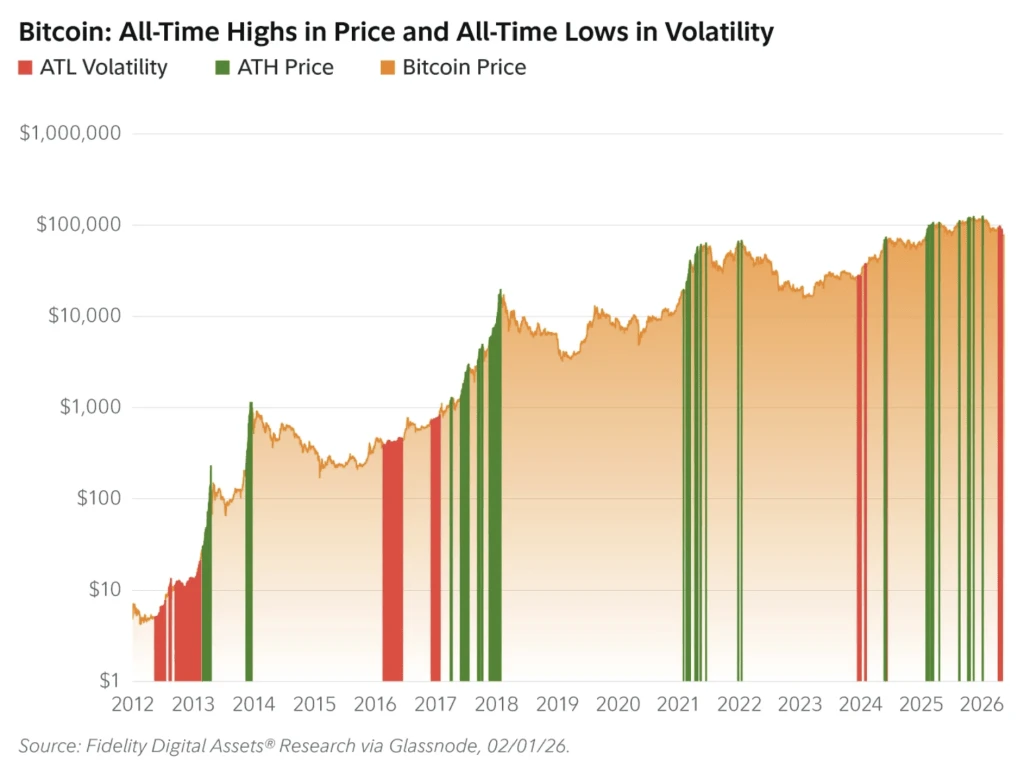
Citing Bitcoin's increased market capitalization, deeper liquidity, and a steadier volatility regime, Fidelity analysts observe that price behavior is diverging from previous cycles. Volatility is decreasing even as prices reach new highs, a trend not seen in earlier market phases.
Fidelity's analysis highlights a significant reshaping of Bitcoin demand. This includes a growing cohort of public companies holding substantial Bitcoin reserves and the rapid adoption of US spot Bitcoin ETFs, which now hold a significant portion of circulating supply. This institutional embrace, a marked contrast to gold ETF growth, is seen as structurally important for mitigating drawdowns.
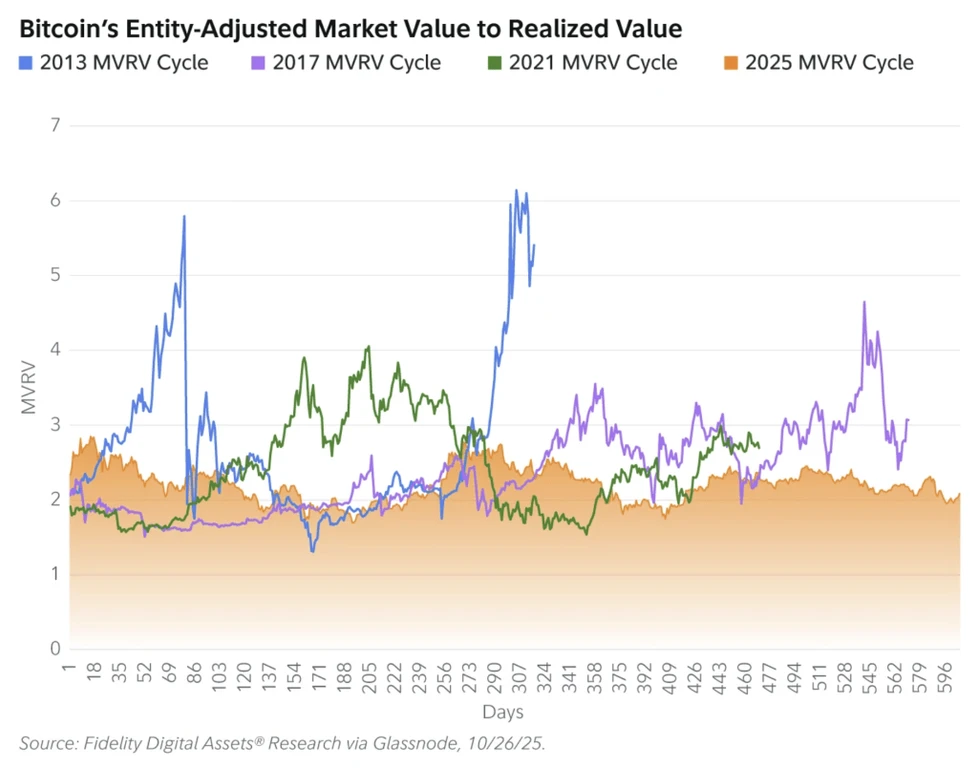
On-chain and issuance-linked measures also indicate increased stability. Metrics like MVRV and the Puell Multiple have remained within tighter ranges compared to previous bull markets, suggesting a less speculative environment.
Fidelity's new "Profit to Volatility Ratio" further supports the claim of enhanced stability, showing sustained periods above a key threshold since late 2023. While volatility is not eliminated, the implication is that classic cycle-ending wipeouts are less likely in a market increasingly driven by institutional channels and a larger, more liquid base. This could lead to a more gradual, sustained price appreciation rather than sharp, cliff-edge resets.