Expert Insights
Governance is the real Layer 1
By Nilmini Rubin, chief policy officer, Hedera
The 2023 Silicon Valley Bank collapse exposed a critical new risk: failures in traditional finance can directly impact digital assets. As blockchains begin underpinning financial markets, the next phase will be defined by coordinated accountability.
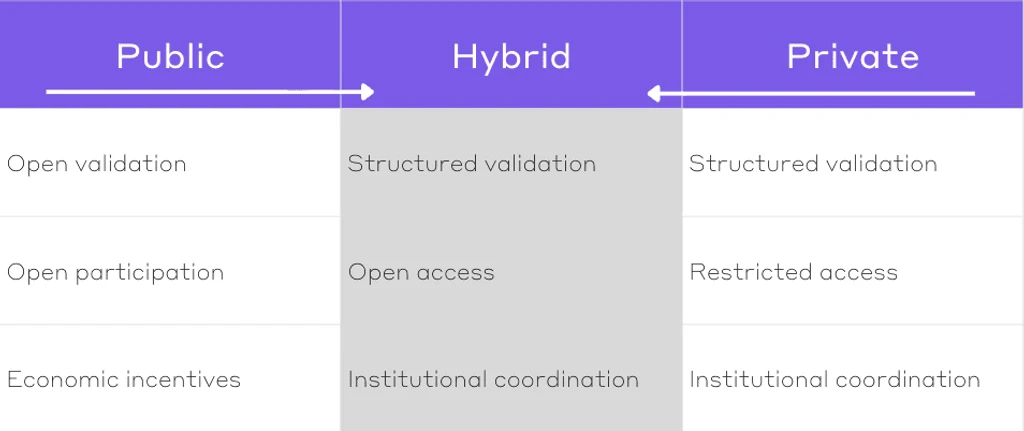
For years, blockchain debates revolved around public vs. private networks. As institutional adoption accelerates, hybrid models are emerging as the preferred solution, combining public verifiability with predictable governance.
During crises like the March 2020 MakerDAO auction failure, effective governance proves a difficult test. As tokenization expands, governance systems must anticipate crises and define decision-making before an event occurs.
Hybrid networks must stress-test their governance structures on-chain to prepare for stablecoin volatility, regulatory shifts, and AI-driven governance dynamics.
The networks that endure will be the ones that know how to govern effectively when the system comes under pressure.
The new financial order: updating TradFi risk for crypto
By Meredith Fitzpatrick, partner and head of cryptocurrency, Forensic Risk Alliance
The convergence of traditional finance and cryptocurrency is here. For financial institutions, crypto fundamentally changes how anti-money laundering risk must be assessed, monitored, and controlled.
In crypto, control rests with private keys. A compromised key is an irreversible transfer of value. This requires controls like multi-signature authorization and cold storage.
Traditional AML relies on customer identity. In crypto, risk assessment must evolve from 'who the customer is' to 'what the wallet does.' This requires continuous monitoring of on-chain activity.
Cryptocurrency money laundering can involve chain-hopping and privacy-enhancing technologies. Transactions can traverse multiple jurisdictions in minutes, rendering legacy screening systems insufficient.
Institutions must redefine risk appetite, introduce specialized teams, and make their Enterprise-Wide Risk Assessment dynamic. Fluency in blockchain analytics is now a core AML function.
Chart of the Week
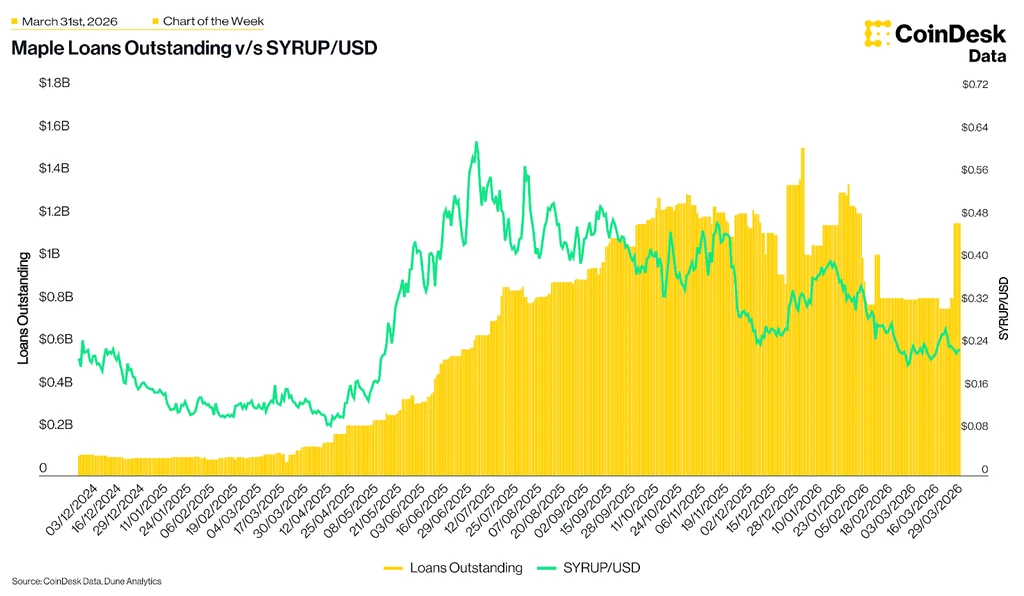
Maple loans surge past $1B on record $350M single-day issuance
Maple's loans outstanding jumped back above $1 billion as the protocol issued $350 million in loans on a single day.