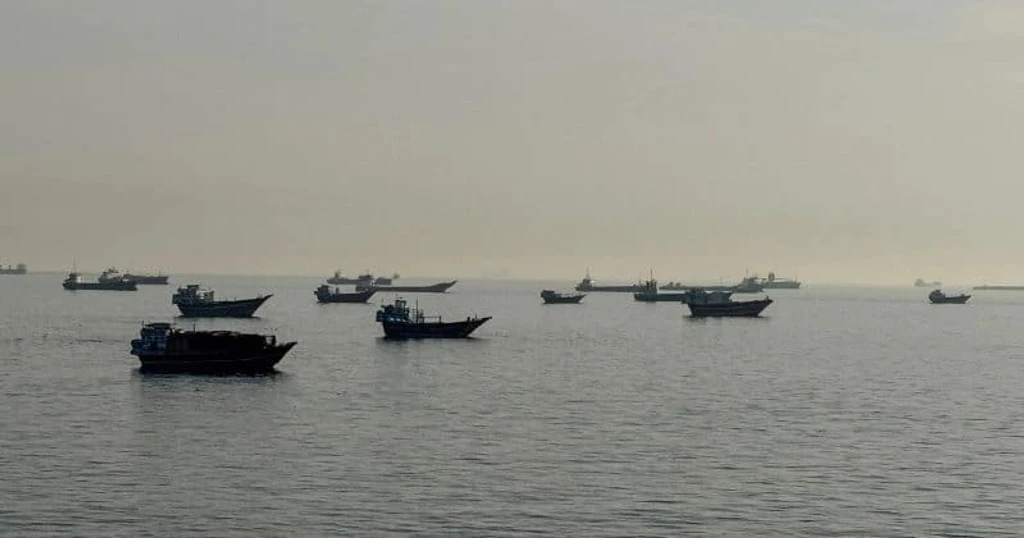
Seven supertankers departed Iran’s Chabahar port on June 19 carrying approximately 14 million barrels of crude oil. This departure marks a dramatic reversal from May when Iranian seaborne exports fell to near zero under a US naval blockade.
The blockade had previously reduced Iranian exports by over 80% from pre-crisis peaks of 2.1 million barrels per day. Following the lifting of restrictions as part of a broader US-Iran peace agreement, production capacity has returned to global markets.
Iran now demands Bitcoin-denominated transit fees for tankers passing through the Strait of Hormuz. The fee is set at approximately $1 per barrel for vessels transiting this critical chokepoint where roughly 20% of global oil supply flows daily.
US sanctions have rendered traditional banking channels unreliable for Tehran. While the US Treasury froze over $344 million in Iran-linked digital assets during the crisis, Bitcoin provides an alternative settlement mechanism outside the SWIFT network.
The restoration of over 2 million barrels per day of Iranian capacity applies immediate downward pressure on global oil prices. Markets had tightened considerably during the blockade period as reduced supply pushed benchmarks higher.
However, the seizure of frozen digital assets demonstrates that governments retain significant intervention capabilities. Bitcoin’s utility faces practical limits when transactions interact with centralized exchanges or custodians under US jurisdiction.