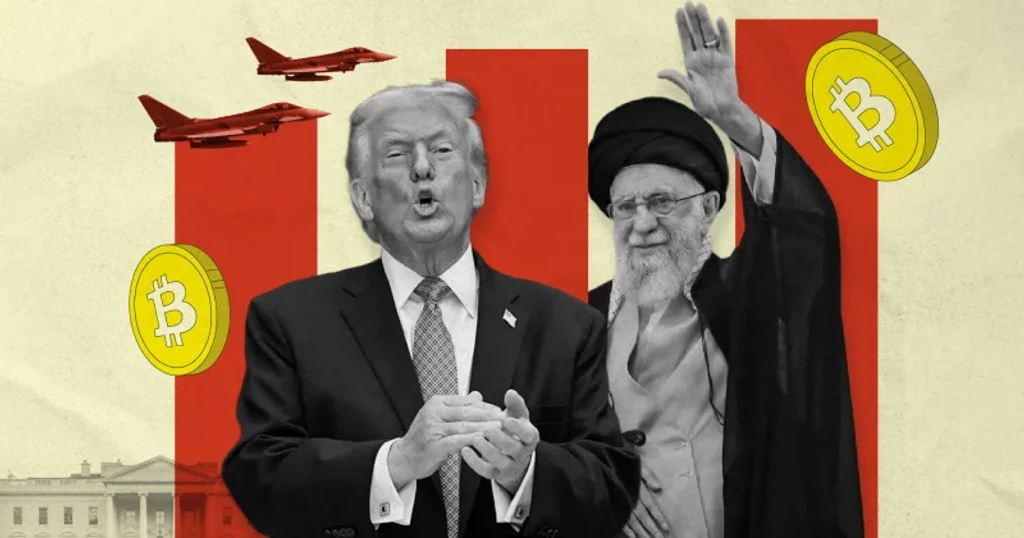
President Trump received military briefings on airstrike options against Iran between May 19 and May 22, as negotiations over Tehran's nuclear program and the reopening of the Strait of Hormuz remain at a standstill. For crypto markets, the timing is critical: Bitcoin has been trading between roughly $65,000 and $80,000 during this stretch of heightened tension.
The Strait of Hormuz carries approximately 20% of global oil flow. A military escalation that disrupts that chokepoint would not only rattle energy markets but send shockwaves through every risk asset on the planet, including crypto.
The current standoff traces back to US-Israeli strikes on Iranian military targets that began in late February 2026 under an operation dubbed Epic Fury. A ceasefire was declared in April, but the diplomatic window that opened has not produced results.
Trump has indicated he came close to ordering renewed strikes but pulled back after receiving counsel from Gulf allies. The message to Tehran is clear: the clock is ticking, and the deal-making window is shrinking.
When strike postponements were announced in March and April, Bitcoin saw a 5% price surge on each occasion. Investors read de-escalation signals and moved accordingly. The inverse has also held true: escalation rhetoric has consistently correlated with downward pressure on Bitcoin's price during this conflict cycle.
Iranian entities have been actively using blockchain networks to circumvent US sanctions. The Iranian exchange Nobitex alone processed $2.3 billion in transactions via Tron and BNB Chain. The US government has responded by freezing an estimated $344 million in digital assets linked to Iranian entities involved in these blockchain transactions.
The more structural concern is regulatory. Every time sanctioned entities are caught using blockchain networks for billions in transactions, it gives ammunition to lawmakers arguing for stricter crypto oversight. Investors in Tron's TRX or BNB should consider whether increased association with sanctions evasion could invite targeted regulatory action.
If the Strait of Hormuz becomes a conflict zone, energy prices spike. Historically, energy price shocks create inflationary pressure, which complicates central bank rate decisions, which in turn affects liquidity conditions for risk assets like crypto.