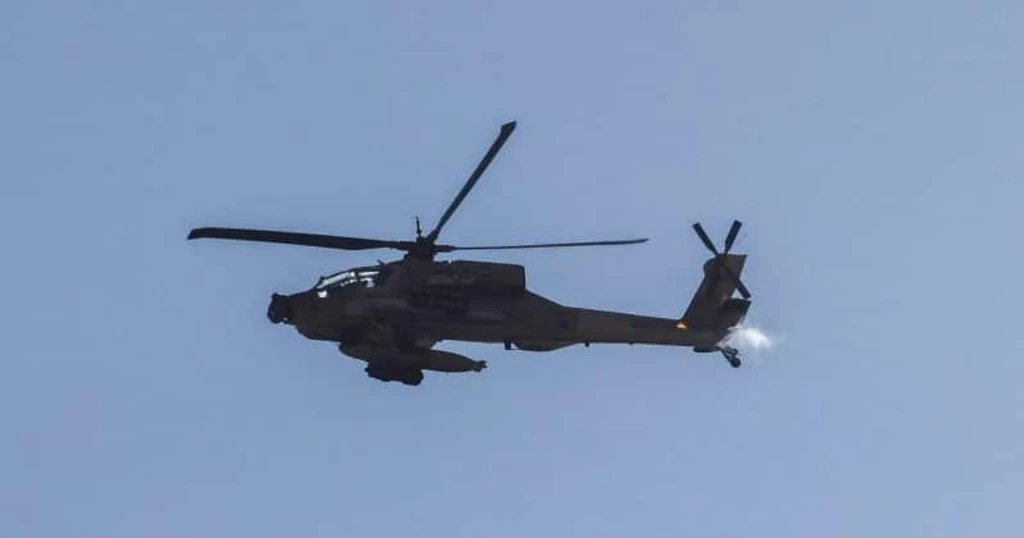
The United States military completed strikes on Iranian targets on June 9, 2026. This action followed a dramatic incident hours earlier when an American Apache helicopter crashed into waters off the coast of Oman.
According to the Pentagon, the crash resulted from a collision with an Iranian drone around 3:30 a.m. local time. Both crew members survived and were rescued by a US Navy autonomous drone boat, marking a first-of-its-kind recovery operation.
President Donald Trump publicly attributed responsibility to Iran, framing the military response as a direct retaliation. The Pentagon confirmed the operation was intended to address the escalation in hostilities.
This event underscores the fragility of the temporary ceasefire that briefly paused tensions in April 2026. Since the 2026 Iran War began on February 28 with joint US-Israeli airstrikes, the region has experienced rapid cycles of violence. The underlying dynamics of Iranian drone operations near critical waterways remain unresolved.
The conflict has already displaced millions and caused thousands of casualties. The Strait of Hormuz remains a global flashpoint, carrying roughly one-fifth of the world's oil supply. Any sustained disruption threatens to spiral energy prices upward.
For financial markets, the pattern suggests a flight from equities and a spike in oil. Bitcoin has shown resilience during prior escalation phases, often recovering quickly after initial dips. Institutional investors are increasingly viewing digital assets as a hedge against geopolitical uncertainty, particularly when traditional safe havens like gold become crowded.
As displacement grows, alternative financial infrastructure including stablecoins may see accelerated adoption in affected regions.