
XRP has become the most traded asset on South Korea's Upbit exchange, pulling in $110 million in 24-hour volume and outpacing both Bitcoin and Ethereum. The surge coincided with the largest inflows into US XRP exchange-traded funds in four months, even as Bitcoin and Ethereum funds saw outflows.
CME Group and NASDAQ announced plans to launch crypto index futures on June 8, covering XRP, Bitcoin, Ethereum, Solana, Cardano, Chainlink, and Stellar Lumens in a single contract. This signals growing institutional infrastructure for regulated digital assets. XRP climbed 4% in 24 hours to nearly $1.5, while Bitcoin traded at $81,450 and Ethereum at $2,287.
The price action followed a markup vote on the CLARITY Act, a proposed federal law driving optimism across payment-focused cryptocurrencies. XRP was not alone: Stellar Lumens, Cardano, and Hedera all posted gains outpacing Bitcoin. These tokens share a common focus on payments, settlement, and tokenization.
If passed, the CLARITY Act would lock in a federal court ruling that XRP sales on secondary markets do not qualify as securities, removing a regulatory cloud that has followed XRP for years.
The legislation also includes Section 401, which would allow US banks to use digital assets for payments, custody, and settlement without prior regulatory approval. For Ripple, which operates the XRP network and issues the RLUSD stablecoin, this opens a direct path into the American banking system.
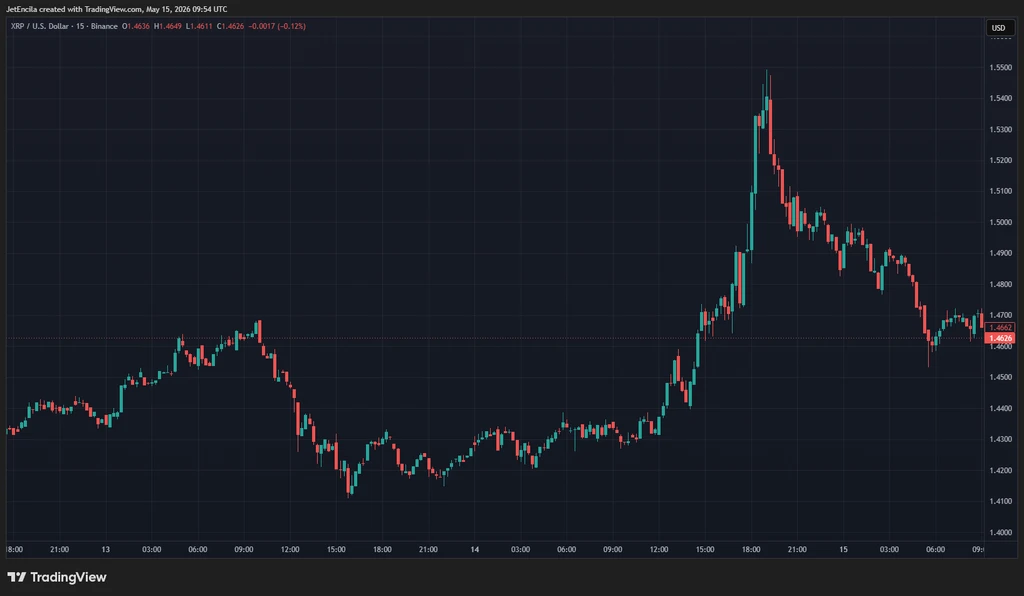
Stellar Lumens, Cardano, and Hedera are catching the same wave. Traders are treating all four as part of a single category-networks built for institutional payments-and pricing them accordingly. The CLARITY Act has not passed yet, but the markup vote was enough to move markets.