XRP’s ability to support bank-scale payments hinges not on market cap but on price stability and liquidity depth, says Digital Ascension Group CEO Jake Claver. In a March 26 analysis, he argued that XRP’s current price is too low to absorb large institutional transactions without severe slippage.
Claver introduced a "liquidity index" combining market depth, slippage, available supply, settlement speed, and access. He stressed that for digital assets to function in global finance, they need a high, stable price-not speculative volatility.
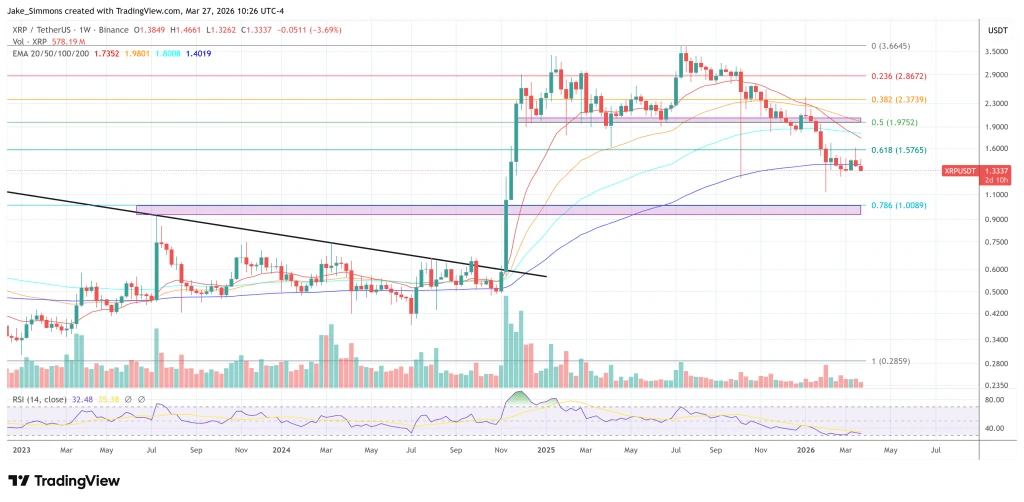
With fixed supply and growing demand, Claver said fewer tokens are available for trading as more get locked in ETFs, treasuries, and DeFi. This shrinking float amplifies pricing pressure. A $100 million transaction today could suffer ~10% slippage, versus under 0.5% in traditional markets.
He explained that higher prices reduce the number of tokens needed for large trades, easing liquidity demands. At $100 per XRP, only one million tokens would be required to settle what now needs 100 million.
Speed alone isn’t enough. XRP settles in 3-5 seconds, enabling rapid capital reuse. But high slippage turns speed into a liability, making efficient order books essential.
Claver concluded that rising XRP price isn’t speculation-it’s a structural necessity for global payment adoption.