
Australia faces a critical juncture in digital assets and tokenized finance, with the potential to generate A$24 billion (approximately $17 billion) annually. A report from the Digital Finance Cooperative Research Centre (DFCRC) warns that realizing this economic benefit is contingent on policymakers establishing clear and supportive regulatory frameworks.
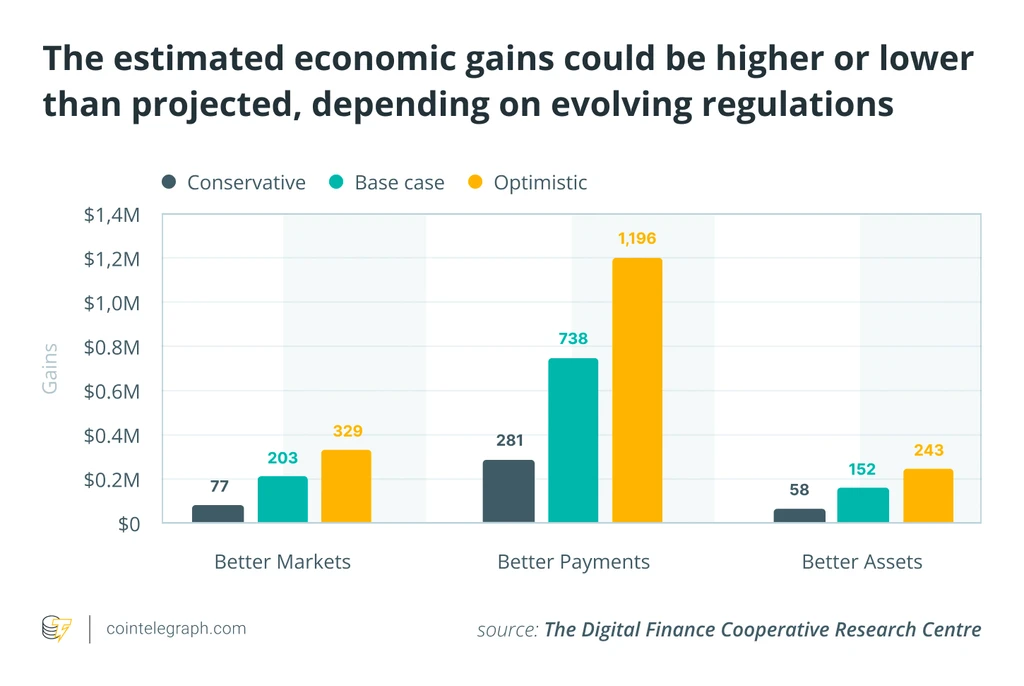
Tokenization offers significant improvements across financial markets. By recording assets like equities and government debt on blockchain, processes become automated, costs decrease, and investor access expands. Furthermore, tokenized money, including stablecoins and central bank digital currencies (CBDCs), promises to reduce the cost and time of cross-border payments by bypassing traditional banking networks.
However, regulatory uncertainty remains the most significant obstacle. Financial institutions hesitate to commit capital without clear rules on licensing, custody, and compliance for digital asset businesses. Key challenges include vague licensing procedures, limited industry-regulator collaboration, and a shortage of large-scale pilot programs.
Without swift regulatory modernization, Australia risks capturing only a fraction of the potential gains. The report highlights that continued delays could lead to A$1 billion (US$710 million) by 2030, a stark contrast to the A$24 billion achievable with a supportive environment. This inaction could result in scaled-back pilot programs, sidelined institutional capital, and talent migration to more regulatory-certain jurisdictions.
Industry stakeholders are calling for clear licensing regimes for digital asset platforms, modern custody rules, a coherent framework for stablecoins, and balanced consumer protections. Specialized regulatory sandboxes are also recommended to test new technologies under close oversight.
Tokenized government bonds and wholesale CBDCs are seen as foundational infrastructure. Initiatives like Project Acacia are exploring how these digital settlement forms can support financial market infrastructure. Ultimately, technological capability alone is insufficient; clear legal frameworks, reliable settlement, custody standards, risk management, and regulatory oversight are essential to build institutional trust and drive mainstream adoption of tokenized finance. The global race for digital asset infrastructure means Australia's regulatory approach is crucial for its economic competitiveness.