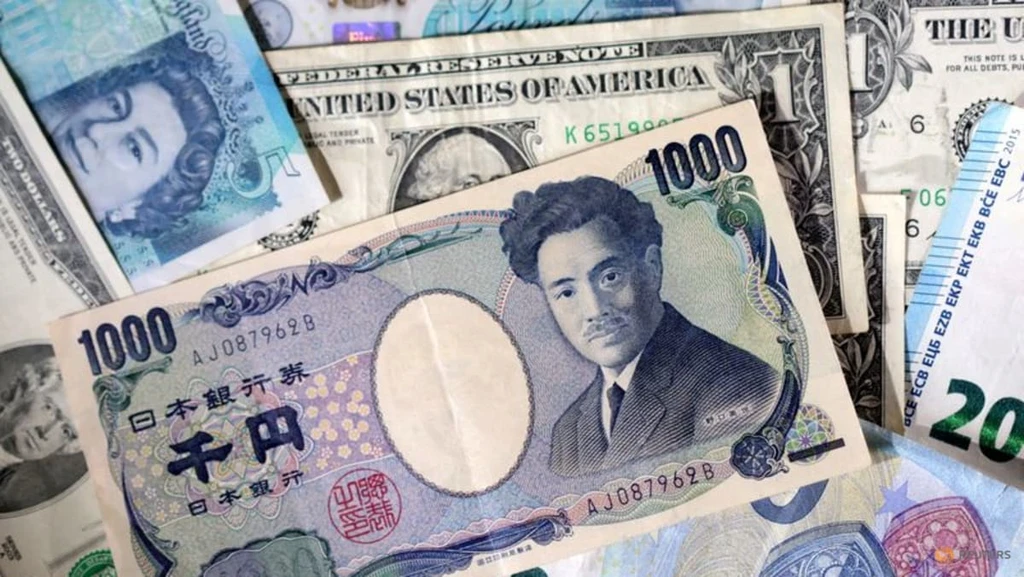
The US dollar edged higher Monday, supported by ongoing tensions in the Middle East that kept investors cautious.
The dollar index ticked up 0.1% to 98.269. Markets remained unsettled after an Iranian news agency reported two missiles hit a US warship near Jask on the Gulf of Oman-a claim the US Central Command denied. The US military said two Navy destroyers entered the Gulf to break an Iranian blockade, successfully transiting two merchant ships through the Strait of Hormuz.
"The blockade is what's keeping everything on hold. As long as everything is on hold, the dollar will remain steady," said Juan Perez, director of trading at Monex USA in Washington. "But risk appetite will immediately increase the moment there's any type of peace deal. That will hurt the dollar."
The euro slipped 0.1% to $1.17135 after German Chancellor Friedrich Merz downplayed a rift with the US over Washington's planned troop drawdown from Germany and President Trump's threat to raise EU auto tariffs to 25%.
"In the grand scheme, it's not a positive, but it's not the main driver," said SEB FX strategist Amanda Sundström. "The Middle East is the dominant factor now."
The yen swung sharply, climbing 0.75% to 155.69 before settling marginally lower against the dollar. Traders suspect Japanese authorities may have intervened, though Ministry of Finance officials declined comment. Data suggests Tokyo spent as much as 5.48 trillion yen ($35 billion) supporting the currency last week.
"The case for intervention is strong," said Roberto Cobo Garcia, head of G10 FX strategy at BBVA. "We expect the Ministry of Finance to defend dollar-yen below 160."
The British pound slipped 0.1% to $1.35655, with UK markets closed for a holiday. The Australian dollar fell 0.2% to $0.71905 ahead of the Reserve Bank of Australia's policy decision Tuesday, where a rate hike to 4.35% is expected.
Bitcoin traded little changed at $79,442, after briefly topping $80,000 for the first time since January 31.