
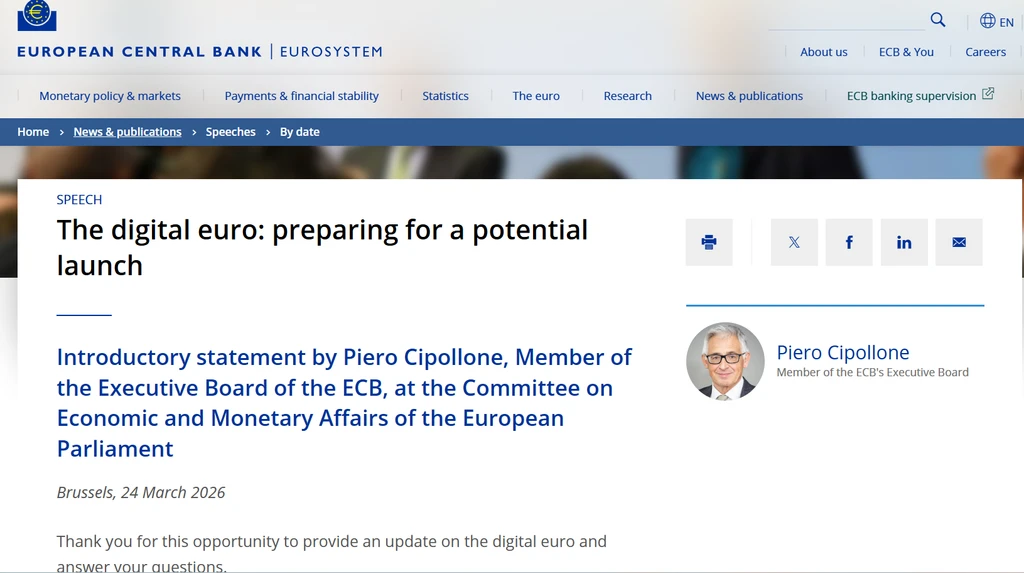
European Central Bank Executive Board member Piero Cipollone announced the ECB expects to unveil European standards for a potential digital euro by summer 2026. This move is designed to let payment providers and merchants integrate the necessary infrastructure ahead of any official launch decision.
Once standards are set, the ECB will collaborate with market participants to embed them into payment terminals and apps, ensuring readiness when EU legislation passes-anticipated in 2026.
A 12-month pilot will begin in the second half of 2027, testing person-to-person and point-of-sale transactions in a controlled environment. Full issuance could follow around 2029, pending legal approval.
Cipollone emphasized the digital euro will complement-not replace-cash and bank deposits. It’s envisioned as public payment infrastructure that private banks and fintechs will use to offer wallets and services.
The initiative aims to reduce Europe’s reliance on international card networks by enabling co-badged cards and unified digital wallets across the eurozone. Accessibility features like voice commands and large-font displays are being built into the reference app design.
Earlier analysis estimated implementation could cost EU banks €4-6 billion over four years-about 3% of their annual IT maintenance budgets-but Cipollone argued long-term benefits like retained merchant fees and scaled European payment systems justify the investment.
The ECB also sees central bank digital money as critical to future wholesale markets, citing its Pontes project for settling tokenized securities and the Appia roadmap for a tokenized European financial ecosystem.