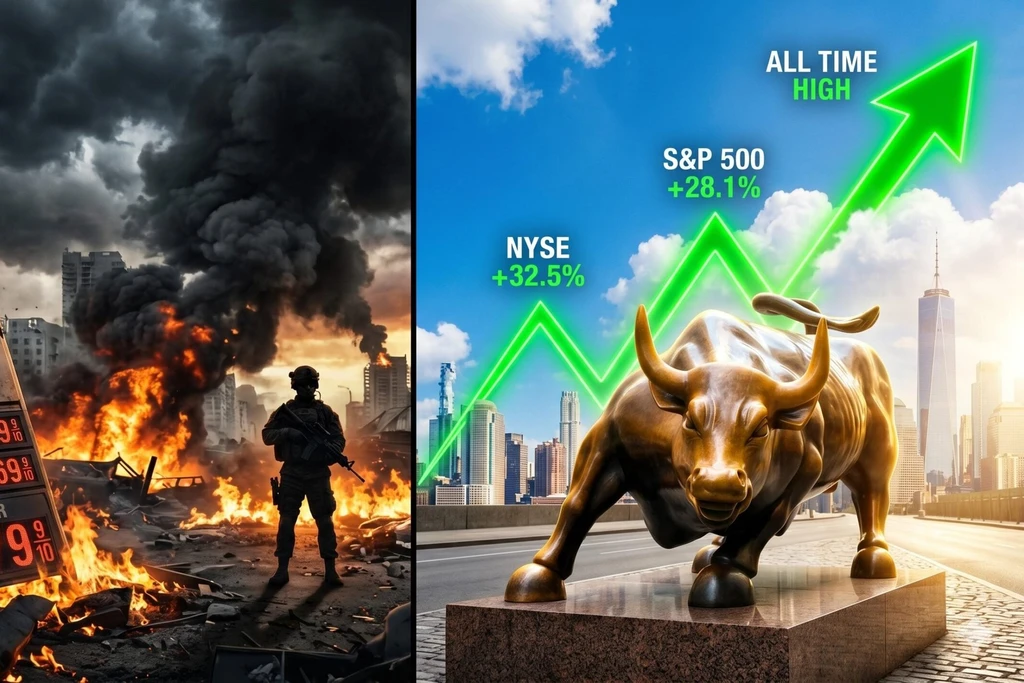
Global conflicts and rising energy prices are not stopping the US stock market. The S&P 500 has surpassed 7,000, hitting record highs, while the Nasdaq also reached all-time peaks. This resilience in the face of world events is a recurring theme, observed during past crises like World War II and post-9/11.
The primary driver is robust corporate earnings. S&P 500 companies are projected to report approximately 13% earnings growth for the first quarter, marking the sixth consecutive quarter of double-digit expansion. A significant 88% of companies that have reported have exceeded earnings estimates, well above the five-year average.
Artificial Intelligence is fueling tech sector growth, with expectations of around 45% earnings expansion. Companies like Nvidia and TSMC are leading the charge, with TSMC reporting a 58% profit jump and forecasting over 30% full-year revenue growth. Despite their success, tech stock valuations have compressed, making them less overvalued.
Wall Street has weathered numerous conflicts, with markets historically recovering quickly after initial dips. Research indicates that stock market volatility can actually be lower during wartime due to predictable government spending and defense contract earnings.
Investors are betting on a swift resolution to current conflicts, pricing in future outcomes rather than present turmoil. While risks of market correction exist if de-escalation fails, the current market sentiment favors peace.
Despite high gas prices, they have already begun to fall from their peaks, a trajectory that influences market expectations more than the current cost. Analysts predict a return to lower prices if tensions ease and oil supply stabilizes.
The current rally is also broad-based, extending beyond Big Tech. Smaller companies have seen substantial gains, and the S&P 500 Equal Weight Index is outperforming the main index, signaling a healthier market.
Finally, the lack of attractive alternatives makes stocks the most viable long-term investment. Bonds offer modest yields, cash is eroded by inflation, and gold is volatile. Historically, stocks deliver an average annual return of around 10%, demonstrating their enduring power as a wealth-building tool through all economic cycles.