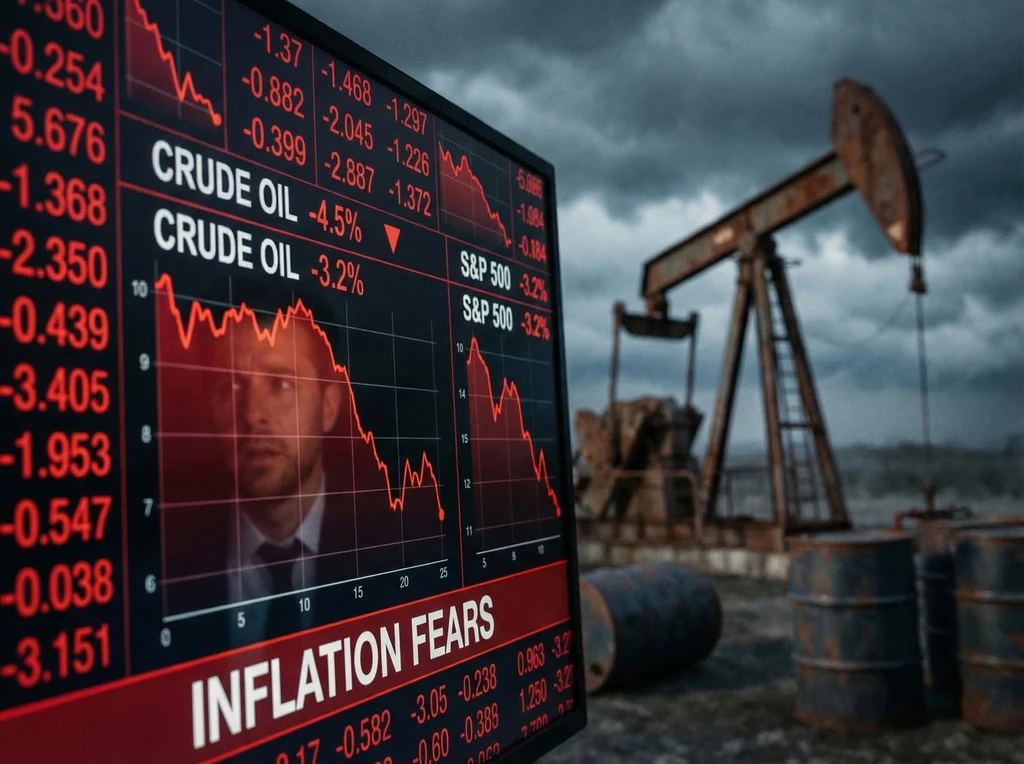
U.S. stock index futures declined Tuesday as oil prices hovered near $100 a barrel amid escalating Middle East conflict, reigniting inflation fears just hours before the Federal Reserve began its two-day meeting.
Wall Street pulled back after a sharp tech-led rally Monday, led by Nvidia’s upbeat AI revenue forecast. The company projected a $1 trillion opportunity in AI chips through 2027 and unveiled new real-time AI infrastructure initiatives during its annual developer conference.
Nvidia shares were flat in premarket trading, while AMD and Broadcom edged lower.
Investors are closely watching energy disruptions, particularly around the Strait of Hormuz, which remains at risk due to regional instability. U.S. President Donald Trump’s call for allies to secure the waterway gained little traction.
Energy firms Occidental and EQT rose about 1%, while travel stocks Delta and Carnival dropped 1% each. Brokerages have revised energy price outlooks upward, warning of potential drag on global growth-a concern echoed by the Australian central bank as it raised rates earlier Tuesday.
The Federal Reserve is widely expected to hold rates steady Wednesday. However, markets are pricing in only one 25-basis-point cut by year-end-down from two-reflecting hawkish sentiment.
UBS analysts cautioned that any stronger-than-expected rhetoric on inflation could spike market volatility.
At 5:11 a.m. ET, Dow E-minis were down 0.22%, S&P 500 E-minis fell 0.30%, and Nasdaq 100 E-minis dropped 0.39%. The Russell 2000 futures lost 0.7%, and the CBOE Volatility Index rose to 24.06.
Despite global turbulence, U.S. equities have outperformed European and Asian markets. Still, Goldman Sachs CEO David Solomon warned investors have yet to fully price in broader economic fallout from the conflict.
Geopolitical ripple effects include the postponement of a planned U.S.-China summit at Trump’s request, dimming recent diplomatic stability.
Uber rose 2.3% on plans to launch robotaxis in 28 cities next year using Nvidia’s autonomous driving platform. Beyond Meat sank 6% after delaying its annual report and posting weak preliminary revenue.