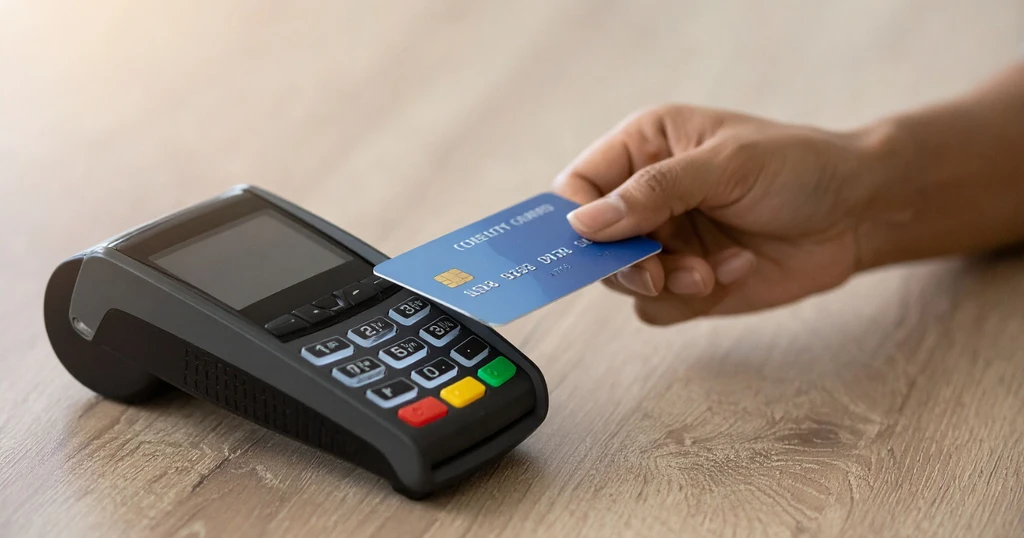
A hidden cost is built into the price of nearly everything you buy. You never agreed to it, and it never appears on your receipt. It is called the interchange fee, or swipe fee, and it has been quietly rising for decades.
The fee is part of a three-layer charge on every card transaction. The largest slice, interchange, goes to the bank that issued the card. A smaller assessment goes to the network, like Visa or Mastercard. The merchant's payment processor also takes a cut. The merchant absorbs these costs upfront, then builds them into the shelf price for all customers.
In the United States, these fees hit a record 198.25 billion dollars in 2025. That is up from 62.1 billion in 2009. Visa and Mastercard, which dominate over 80 percent of the market, set these rates. The average credit card fee has risen from about 2 percent in 2010 to roughly 2.36 percent today. For a typical American family, this hidden cost is estimated at 1,200 to 1,800 dollars per year.
The system creates an unfair transfer of wealth. Because merchants spread the cost across all prices, cash-paying customers effectively subsidize those who pay with cards. Card use and lucrative rewards, like cashback and airline miles, tend to rise with income. This makes the fee structure regressive, shifting costs from higher-income households to lower-income ones.
The fees keep climbing because of rewards. Banks compete by offering better perks on premium cards, which carry higher interchange rates. The more banks compete on rewards, the more the underlying fee must increase to pay for them. Merchants feel trapped; refusing major card networks would mean losing most customers.
Other regions have a different approach. The European Union capped consumer debit interchange at 0.2 percent and credit at 0.3 percent in 2015. This makes U.S. fees look vastly more expensive. Some governments are now building their own payment systems to avoid relying on U.S.-controlled networks.
Card networks argue the fee pays for real services like fraud protection and instant payment. However, the only factor that has reliably stopped the fee from rising is a government-imposed cap, which exists only in places like the EU. Elsewhere, the quietest fee in the economy just keeps going up.