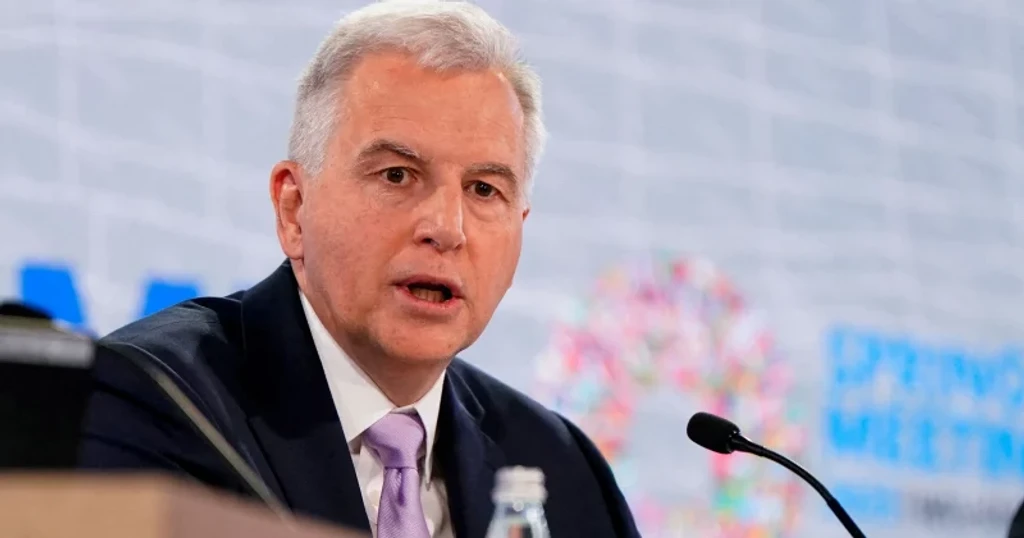
The International Monetary Fund is pushing the European Union to overhaul its financial playbook. Addressing EU finance ministers in Nicosia on May 23, the IMF recommended that member states cut national debt, implement structural reforms, and increase joint borrowing to fund "European public goods." These include defense, energy security, and innovation.
The EU faces ballooning costs over the next 15 years due to defense needs, the energy transition, and aging populations. The IMF suggests doubling current EU-level spending from 0.4% of gross national income. Pooling debt could yield interest savings and efficiency gains equal to about 0.47% of GDP.
This proposal creates a clear political divide. Spain, Italy, and France support joint borrowing, while Germany and several northern states oppose it, fearing it forces disciplined countries to subsidize less restrained neighbors.
The EU already used joint debt during the pandemic with the NextGenerationEU recovery fund, which was framed as a one-time exception. The IMF now argues that approach should become standard.
For bond markets and investors, a permanent expansion of EU-level bonds would create a deeper, more liquid euro-denominated safe asset pool. That could compress yield spreads between core and peripheral eurozone members and strengthen the euro's standing as a reserve currency, narrowing the gap with U.S. Treasuries.
The key variable remains Germany. Without Berlin's support, joint debt expansion remains a concept, not a policy.