Silver can serve as a portfolio diversifier and partial inflation hedge, but its price volatility far exceeds gold. It's best suited for long-term investors with moderate risk tolerance.
Silver prices are driven by supply constraints, industrial demand (electronics, solar, medical), economic uncertainty, and interest rates. When rates fall, silver tends to benefit.
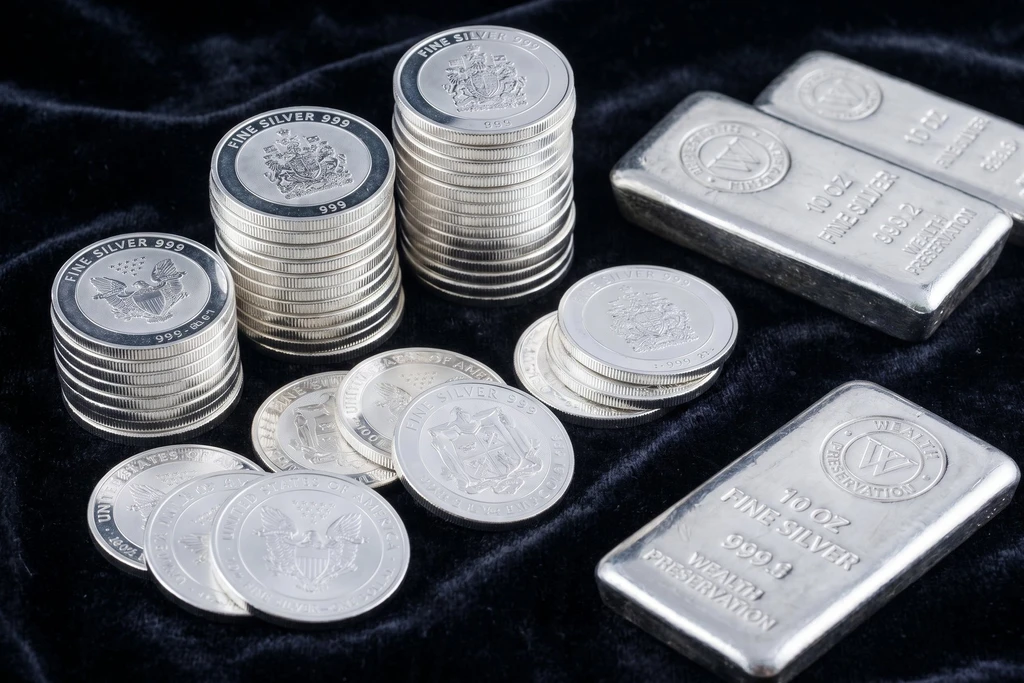
How to invest: Physical coins and bars offer direct ownership but require secure storage and carry higher transaction costs. Silver ETFs provide price exposure without storage hassles. Mining stocks offer indirect exposure but add company-specific risk. Futures and derivatives allow leverage but amplify losses.
Most experts recommend allocating 4% to 6% of your portfolio to silver, with 5% to 10% as a general precious metals range. It's a complementary asset, not a primary holding.
Risks: Price volatility, storage and insurance costs, lower liquidity, and higher capital gains tax rates (collectible tax treatment).
Comparison: Silver is a more volatile, industrial-influenced version of gold. It tends to amplify gold's moves-higher upside potential but sharper downside.
Bottom line: Silver works best as a modest, long-term position for sophisticated investors seeking exposure beyond traditional assets. Not suitable for short-term speculation or those needing quick liquidity.