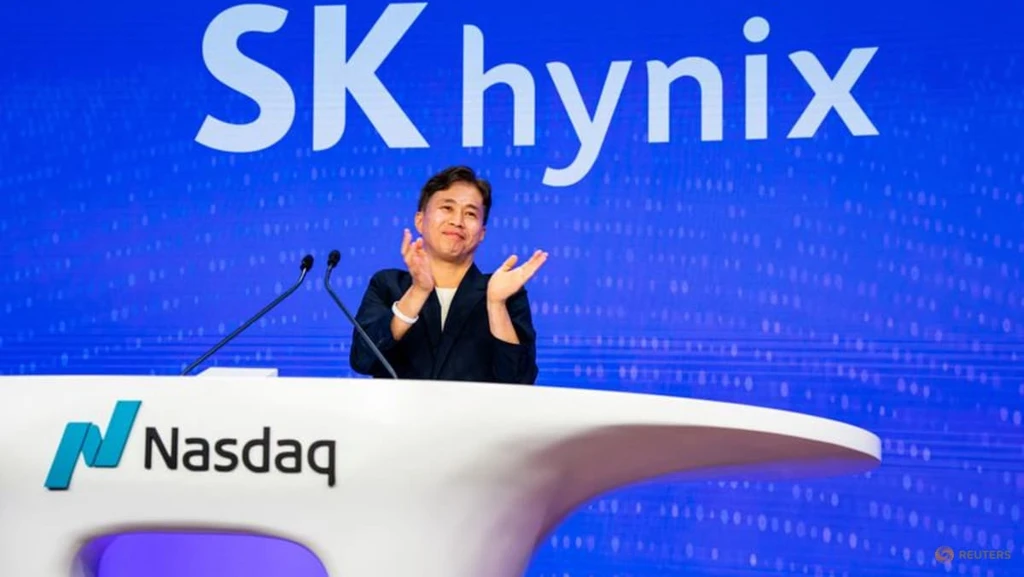
SK Hynix Chief Executive Kwak Noh-jung has issued a stark warning: the global memory industry is heading for its worst-ever supply shortage in 2027.
"We forecast that next year will be the worst year in the industry's history from the supply perspective," Kwak told Reuters. He emphasized that despite aggressive expansion, customer demand will continue to outpace the company's production capacity well beyond 2030.
The prediction comes as SK Hynix, a pivotal player in the AI supply chain due to its leadership in high-bandwidth memory (HBM) for Nvidia chipsets, made a strong Nasdaq debut. Shares jumped over 13% on the first day of trading.
Kwak confirmed the United States is a candidate for future wafer fabrication investment, alongside Japan and Southeast Asia. The decision will hinge on locations offering sufficient land, electricity, water, and skilled labor at competitive costs.
The company is already investing $4 billion in an advanced chip packaging factory in Indiana and $10 billion to develop a U.S.-based AI solutions company. This aligns with a broader South Korean government plan to double national memory chip production capacity, involving massive investment from both SK Hynix and Samsung Electronics.
Despite some market speculation about an AI investment peak, major industry voices remain bullish. Nvidia CEO Jensen Huang stated memory shortages will persist for years, naming SK Hynix as its largest supplier. Analysts at UBS and Bank of America concur, projecting an undersupplied market and continued hyperscaler capital expenditure growth.
SK Hynix is a major beneficiary of the AI boom. Its operating profit hit a record $31 billion in 2025, with projections for the second quarter of 2025 suggesting even stronger performance. While its shares have experienced recent volatility, they have risen sevenfold over the past year.