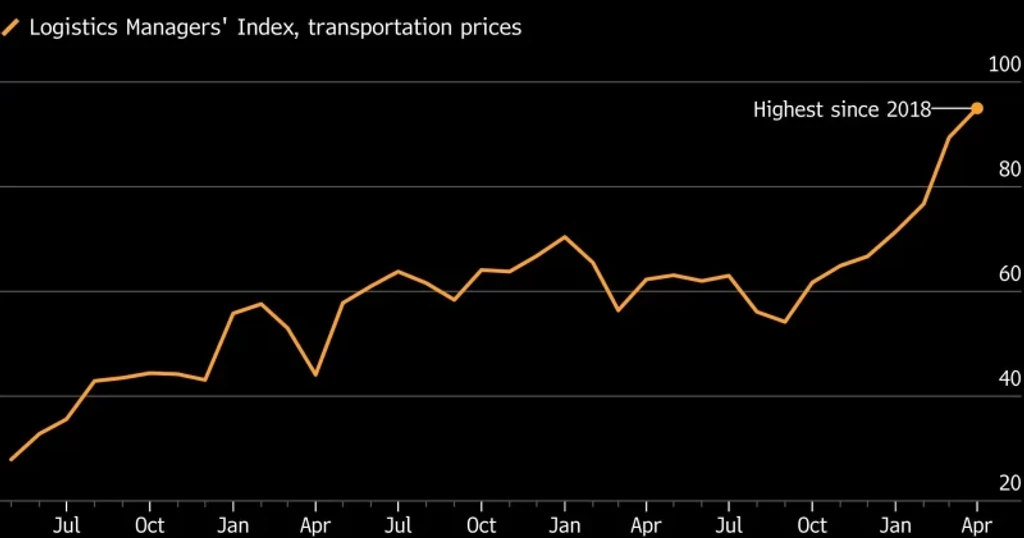
The Logistics Managers' Index for March 2026 hit 65.7, with the Transportation Prices sub-index jumping 12.7 points to 89.4-the highest since March 2022, when the Fed was launching its most aggressive rate-hiking cycle in decades.
Aggregate logistics costs reached 233.0, a level not seen since May 2022, signaling a sustained trend rather than a one-month blip.
The catalyst: geopolitical tensions around the Strait of Hormuz pushing fuel prices higher, combined with declining transportation capacity.
Producer prices posted their largest monthly gain in four years in April 2026, a leading indicator for consumer prices. Unlike the pandemic-driven disruptions of 2021-2022, today's supply shocks are rooted in geopolitical conflict-harder to predict and potentially longer-lasting.
For investors, the implication is clear: elevated logistics costs reduce the probability of near-term Fed rate cuts. Sectors most exposed include shipping, trucking, and e-commerce.
While moderating consumer demand may help, cost-push inflation driven by supply-side shocks requires more than demand management to resolve.