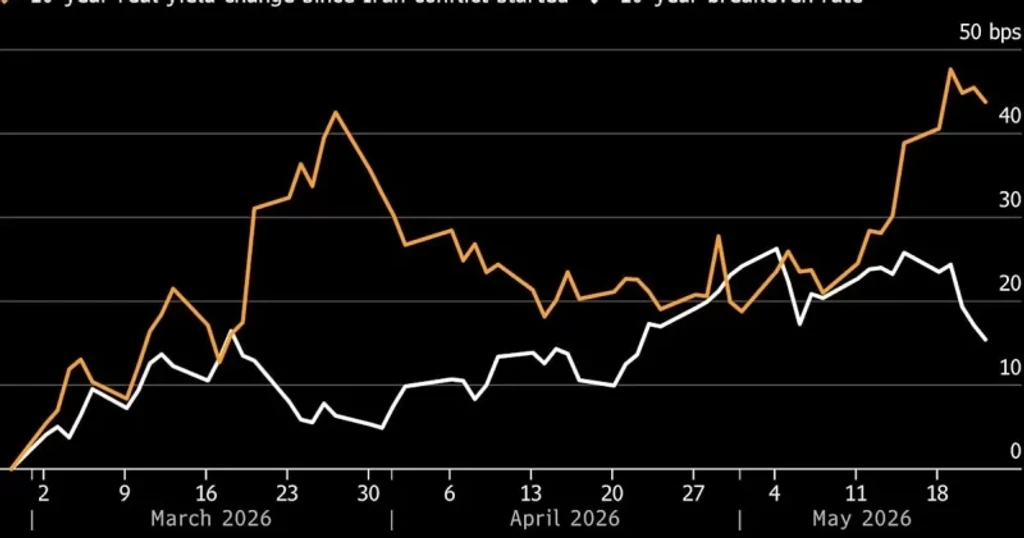
The US government’s already enormous interest bill is about to get significantly worse. Rising Treasury yields, fueled by the escalating US-Iran conflict, could increase federal interest payments by tens of billions of dollars.
What’s Driving the Yield Spike
Brent crude has been oscillating between $80 and $100 per barrel as markets price in potential disruptions to the Strait of Hormuz, one of the world’s most critical oil chokepoints. Higher oil prices mean higher inflation expectations, and higher inflation expectations mean investors demand more yield to hold government debt.
The 10-year US Treasury yield has climbed to multi-month highs, trading between 4.4% and 4.58% across March to May. The 2-year yield jumped by over 0.5 percentage points during the most acute periods of conflict-related tension.
The Cost of $36 Trillion in Debt
The US has roughly $36 trillion in outstanding debt. Even modest increases in yield, when applied across that mountain of obligations as debt rolls over, translate into enormous additional costs. The conflict escalated around March 2, 2026, following strikes that killed Iran’s Supreme Leader, Ayatollah Ali Khamenei.
The Fed’s Shrinking Playbook
Before the conflict escalation, markets had been pricing in potential rate cuts as part of an eventual easing cycle. Those expectations are now fading fast. The inflationary pressures created by the conflict have effectively boxed the Federal Reserve in, removing one of the key tools that had been supporting risk appetite across financial markets.
What This Means for Crypto Investors
Bitcoin has been trading in a range of approximately $68,000 to $77,000 during this period of geopolitical upheaval, caught between macro uncertainty pulling prices down and structural demand providing a floor. When yields rise sharply, risk assets tend to sell off as capital rotates toward the suddenly more attractive returns available in government bonds. Ethereum and other altcoins face a tougher setup, as these assets tend to amplify moves in broader market sentiment.