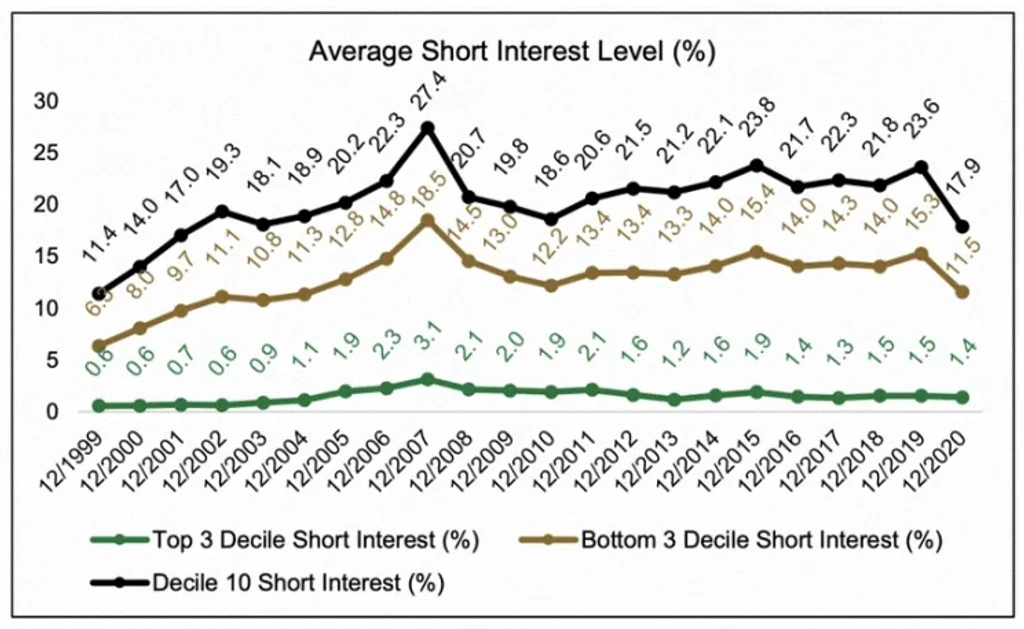
Traders are piling on bearish bets against US stocks at a pace not seen in years. According to data from Global Markets Investor, the median short interest across S&P 500 constituents has climbed to roughly 3.7%, the highest level in 11 years.
The Nasdaq 100 shows median short interest near 2.7%, a six-year high. But the standout is the Russell 2000, where short interest has pushed toward 5.0%, marking a 15-year peak. Small caps, more volatile and harder to short profitably, are attracting bearish bets at a rate not matched since the post-financial-crisis era. The acceleration has been notable since mid-2024, with momentum picking up further into 2026.
Short squeezes remain a key risk. The classic dynamic works: short sellers borrow shares, sell them hoping to buy back cheaper, but if the price rises, they face mounting losses and are forced to cover, creating a feedback loop that drives prices higher. GameStop in January 2021 remains the most famous example, but the current environment is unusual due to its breadth. This is not a handful of meme stocks; it is historically high bearish positioning across the three most important US equity benchmarks simultaneously.
The Russell 2000’s 15-year high warrants close attention. Small-cap stocks often lead the broader economy, due to their reliance on domestic revenue and sensitivity to credit conditions. That traders are shorting small caps at the highest rate in roughly 14 years suggests meaningful skepticism about the health of the US economic expansion.
Another dynamic to watch: the interplay with options markets. When short sellers hedge with call options, it creates additional mechanical pressure. Dealers who sold those calls must buy shares as prices rise, adding a layer of forced buying on top of the short covering itself. This buildup in bearish positioning has occurred without any obvious connection to crypto or digital asset markets; it is firmly rooted in traditional equity dynamics.