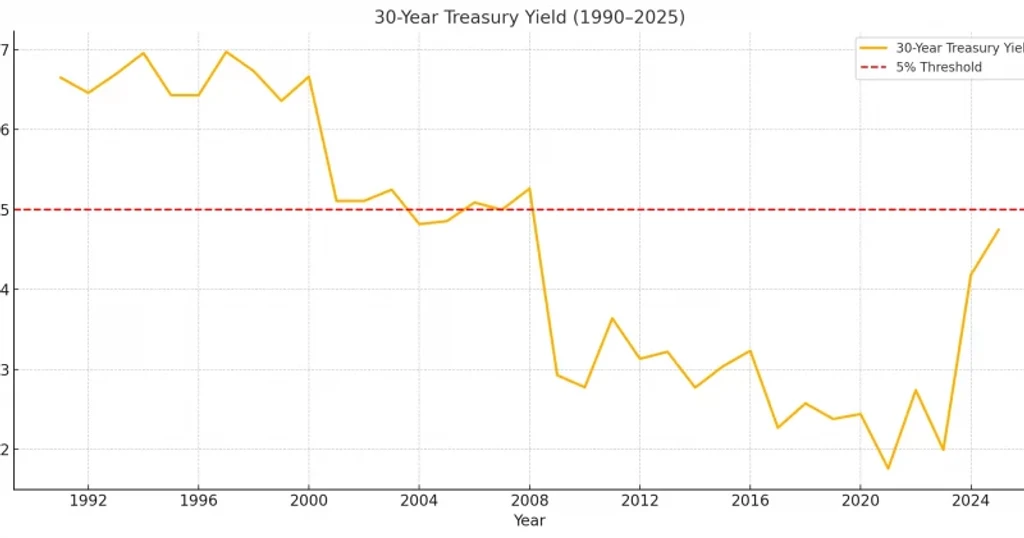
The US 30-year Treasury yield closed at 5.02% on May 14, a level that historically triggers broad market unease. The last time this happened, in October 2023, equities sold off, crypto stumbled, and risk appetite vanished.
Driving this move is inflation anxiety fueled by geopolitical tensions, rising energy costs, and soaring defense spending. The U.S. is also financing massive deficits, flooding the market with new Treasury supply. More supply with steady demand pushes bond prices down and yields up.
Expanding term premium reflects investor uncertainty over the fiscal trajectory. Lenders demand more compensation for the risk of holding long-term U.S. debt.
For crypto markets, the October 2023 episode was instructive: yields above 5% triggered a broad sell-off. Rising real yields correlate with altcoin underperformance and increased stablecoin dominance. Investors rotate out of speculative positions into assets offering yield without volatility.
Stablecoins benefit indirectly, as their reserves earn more income from higher yields. But the broader effect on crypto is negative, as capital diverts from Bitcoin, Ethereum, and smaller tokens into bonds.
DeFi lending rates also feel the squeeze. When traditional finance offers higher risk-free returns, on-chain rates must adjust to stay competitive, tightening credit across the decentralized ecosystem.
Historically, sustained high real yields reduce appetite for risk assets across the board. Growth-oriented segments like technology and digital assets tend to underperform when bonds offer meaningful returns. If yields grind higher, driven by persistent deficits and sticky inflation, the drag on risk assets could be prolonged.