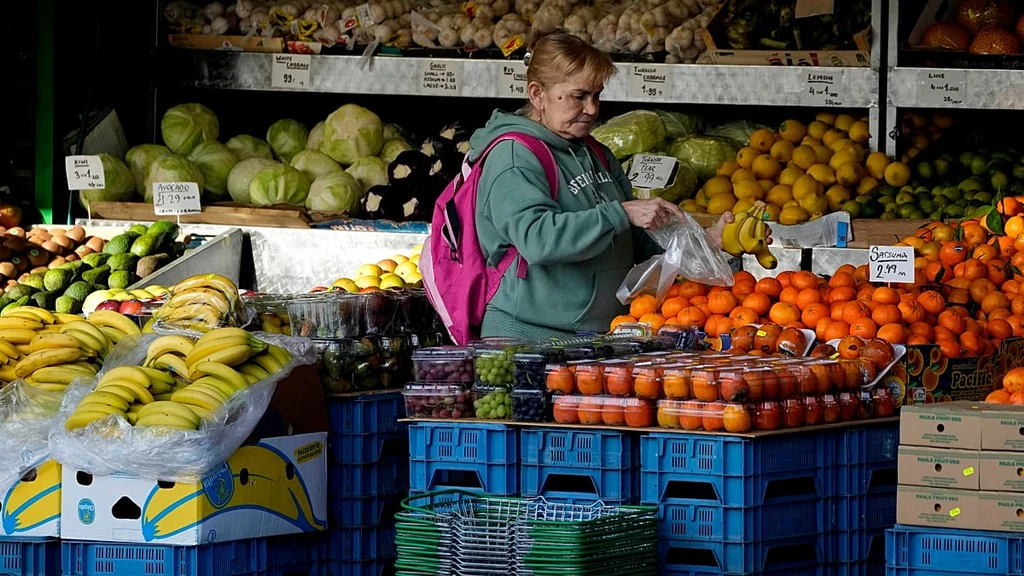
The US-Israeli strikes on Iran and Tehran’s retaliation have driven Brent crude above $100, triggering a chain reaction that threatens food prices across Europe.
Experts warn that higher energy costs are disrupting key inputs for agriculture-fertilizer supply, shipping, and production-amplifying inflationary pressure on food.
Zsolt Darvas of Bruegel said global trade routes through the Strait of Hormuz, now disrupted by conflict, carry major shares of oil and fertilizer. Their closure hits energy and agricultural supply chains simultaneously.
The FAO projects fertilizer prices to rise 15-20% in early 2026 if tensions persist. Maximo Torero, FAO chief economist, stressed that high energy costs raise expenses across farming, transport, storage, and processing-pressures eventually passed to consumers.
Three main channels drive food inflation: soaring energy costs, global fertilizer price spikes, and increased biofuel demand. As oil prices climb, maize, soybean oil, and palm oil are diverted from food to fuel, tightening grain supplies.
Countries most exposed include the Netherlands and Belgium-major refining and petrochemical hubs-and Germany, France, Italy, and Spain, all heavy diesel users in transport and agriculture.
Natural gas dependency further elevates risks. Spain, France, Italy, and the Netherlands rely significantly on Gulf-sourced LNG, while Dutch and Belgian industries depend on naphtha and other feedstocks.
Maria Castroviejo of Rabobank noted farmers may not feel full impact until autumn, when new fertilizer purchases resume. Past trends show a lag between energy spikes and supermarket price hikes.
Oxford Economics warns Europe faces greater shock than the US due to tighter energy interdependence. In 2025, EU food inflation averaged 3.3%, but exposure varies-from 0.3% in Cyprus to 7% in Estonia. Turkey saw over 30%.