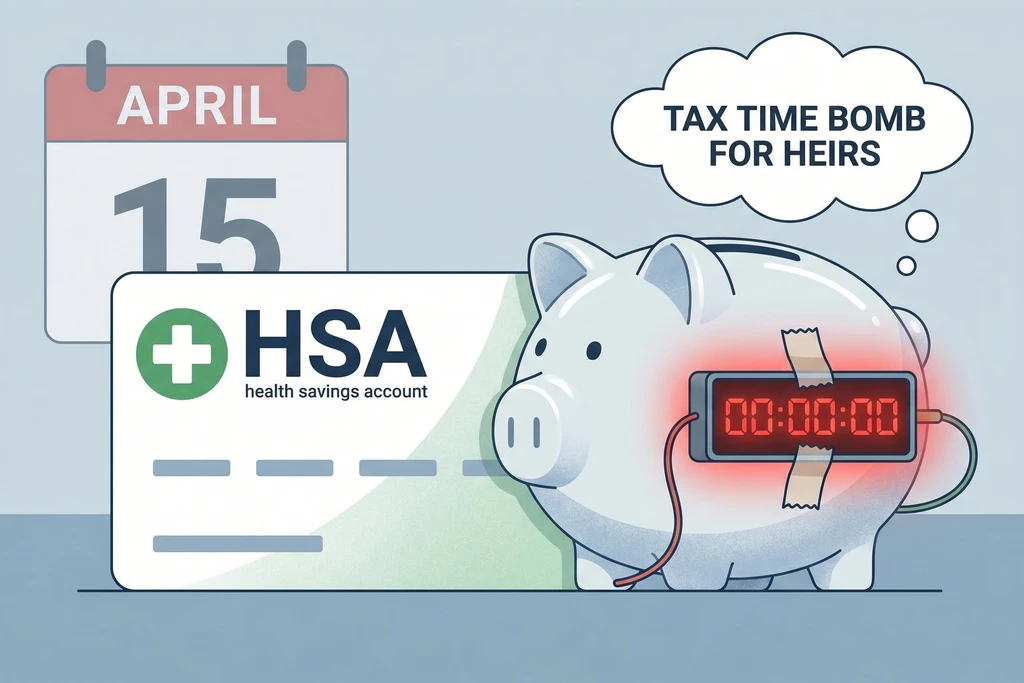
Health Savings Accounts are prized for their triple tax advantage: contributions are tax-free, growth is tax-free, and withdrawals for qualified expenses are tax-free. But that advantage can vanish upon death if the account is left to a non-spouse beneficiary.
When a spouse inherits an HSA, they simply assume ownership and continue using it tax-free for medical expenses. However, for any other beneficiary, the account loses its tax-advantaged status immediately. The full balance becomes taxable income to the heir in the year of the account holder's death, with no step-up in basis or ten-year stretch to spread out the tax liability.
This is a growing concern as more Americans are widowed or single. In 2022, over 1.5 million people were widowed. And among adults 55 and older, 16.5% are childless, making non-spouse beneficiaries increasingly common.
Why HSAs Still Make Sense
Despite the inheritance pitfalls, financial advisors still recommend maximizing HSA contributions. The tax benefits are unmatched. You can even reimburse yourself years later for medical expenses paid out of pocket, using saved receipts. This effectively turns the HSA into a tax-free growth vehicle that can supplement retirement income.
At the end of 2024, there were 39.3 million HSAs covering 59.3 million Americans. Recent legislative changes have expanded HSA eligibility to millions more.
Strategies to Defuse the HSA Tax Bomb
Advisors recommend several strategies to minimize the tax hit for heirs:
- Use HSA funds for medical expenses. You can pay for Medicare premiums, long-term care insurance, dental, and vision care tax-free.
- Reimburse yourself from past receipts. If you have years of unreimbursed medical expenses, withdraw that amount tax-free and replace the funds with non-HSA assets that pass more favorably to heirs.
- Consider the heir's tax bracket. If your heir is a high earner in a high-tax state, it may be better to withdraw HSA funds yourself, especially if you are in a lower tax bracket. After age 65, you can withdraw for any purpose without penalty, though you'll pay income tax.
- Name a charity or donor-advised fund as beneficiary. This allows the HSA to pass tax-free.
Crucially, always name a beneficiary. Without one, the HSA assets are taxed on the deceased's final tax return and cannot be used for final medical expenses.