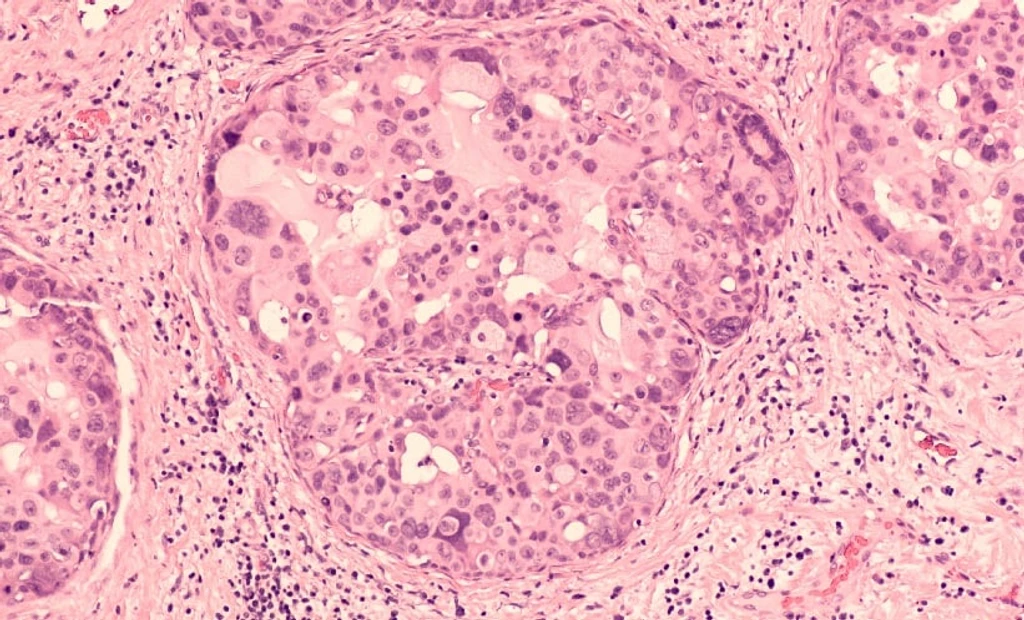
A new study shows contrast-enhanced mammography is significantly more effective than low-energy imaging alone at detecting ductal carcinoma in situ (DCIS). DCIS is a non-invasive breast cancer where abnormal cells remain confined to the milk ducts. The research, a retrospective analysis of 190 patients, found contrast-enhanced mammography had an overall sensitivity of 89.3%, compared to 72.4% for low-energy imaging.
The advantage was particularly striking for non-calcified lesions, where detection rates jumped from 39.4% to 76.1%. The technique also provided a better assessment of lesion extent and revealed distinct imaging patterns across different tumor grades. High-grade DCIS was more likely to show calcifications and larger lesion size.
These results suggest contrast-enhanced mammography could improve pre-surgical planning and diagnostic confidence, though further multi-center studies are needed to confirm these findings.