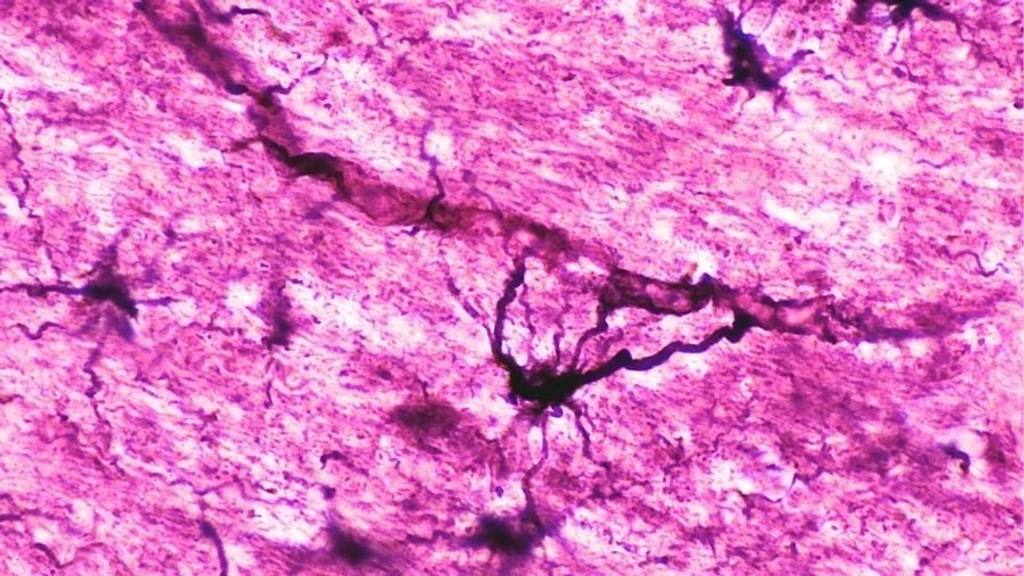
The disease attacks astrocytes, which are support cells in the brain and spinal cord. (Juan Gaertner/Science Photo Library)/Getty Images)
A severe autoimmune disease called neuromyelitis optica, or NMO, can cause major disability by attacking brain and spinal cord cells.
Standard treatments are expensive, risky, and often fail, making relapses common.
Now, Italian researchers report a breakthrough: two patients treated with allogeneic hematopoietic cell transplantation (alloHCT) have been in remission for over 15 years.
Disability scores dropped for both patients over time. (Orofino et al, Med, 2026)
The procedure uses donor stem cells to reboot the patient's immune system. Both patients were 28 at the time of treatment.
More than 15 years later, both remain relapse-free without medication. The disease-driving antibodies have permanently disappeared.
One patient has regained neurological function and fathered two children. The other has a good quality of life and regained some arm use.
MRI scans were used to monitor the patients for 15 years and 16 years respectively. (Orofino et al, Med, 2026)
The treatment involves chemotherapy to wipe out the immune system's B cells before the donor stem cells rebuild it.
The approach is drastic and risky. One patient developed chronic immune deficiency; the other had treatable bladder cancer. Neither complication was definitively linked to the transplant.
Researchers caution that alloHCT is best reserved for young, carefully selected patients with treatment-resistant disease. They call for larger studies to confirm safety and efficacy.