
Medical professionals have reported the discovery of sheep bot fly larvae and a pupa within the nasal cavity of a woman, a finding that experts initially deemed "biologically implausible." The patient underwent surgery to remove the parasitic organisms, yielding 10 larvae at various developmental stages and a single pupa.
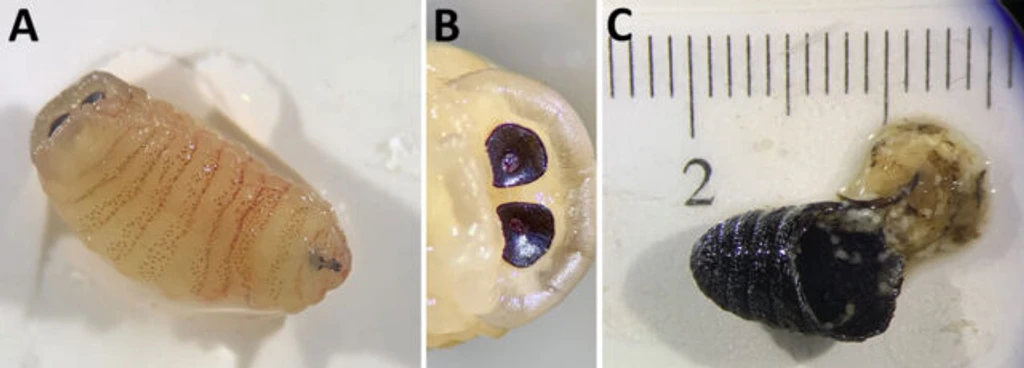
Scientists, led by Ilias Kioulos of the Agricultural University of Athens, speculated that a combination of a large initial infestation of larvae and the patient's severely deviated septum facilitated the unusual development. The experts noted that the nasal sinus environment typically lacks the necessary temperature and humidity for pupation, and host secretions and immune responses create a hostile condition for such development. This case suggests a potential adaptation of flies to complete their life cycle in human nasal passages.
While the patient experienced secondary infections, clinicians are now advised to be aware of the possibility of sheep bot fly infections in humans, as these parasites are globally distributed.