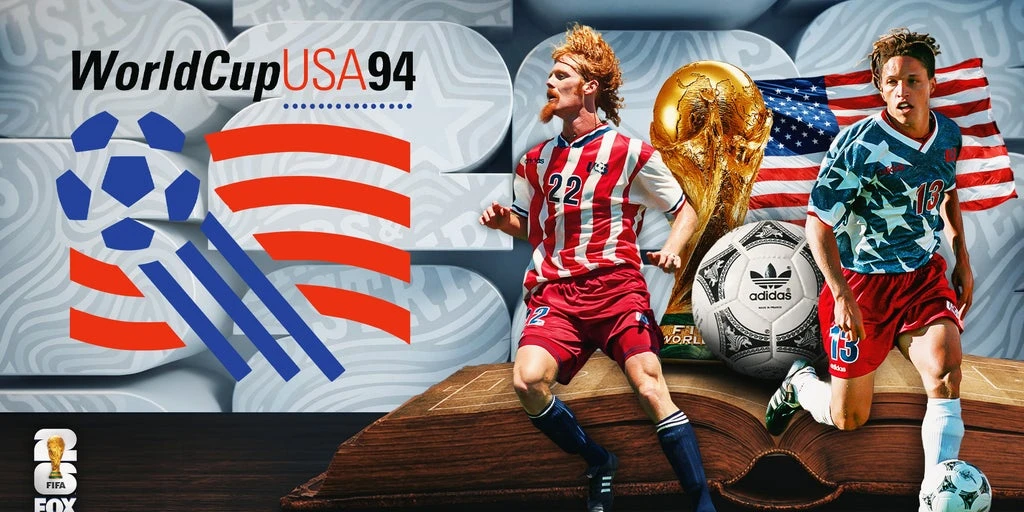
In 1994, the United States proved global critics wrong as hosts of the World Cup. Skeptics in Europe and South America argued that a country without a top-tier professional league was a questionable choice for the world’s biggest sporting event. But the summer of soccer saw massive crowds and defining moments.
The U.S. men's national team opened against Switzerland at the Pontiac Silverdome. A wonder goal from Eric Wynalda secured a 1-1 draw. The U.S. then stunned Colombia 2-1 at the Rose Bowl but lost to Romania, setting up a Round of 16 clash with Brazil.
On July 4 at Stanford Stadium, Brazil beat the U.S. 1-0. Brazil went on to win the tournament, defeating Italy on penalties in the first World Cup final decided by a shootout. Italy star Roberto Baggio missed the decisive penalty.
The tournament featured legendary moments: Diego Maradona's final goal and failed drug test, Oleg Salenko's record five goals in one match, and Bulgaria's fairy-tale semifinal run led by Hristo Stoichkov.
The 1994 World Cup changed U.S. sports culture. A record 3.6 million spectators filled stadiums, leading directly to the creation of Major League Soccer. As the U.S. prepares to co-host the 2026 World Cup, it now has a deep talent pool and a soccer infrastructure that didn't exist 30 years ago.