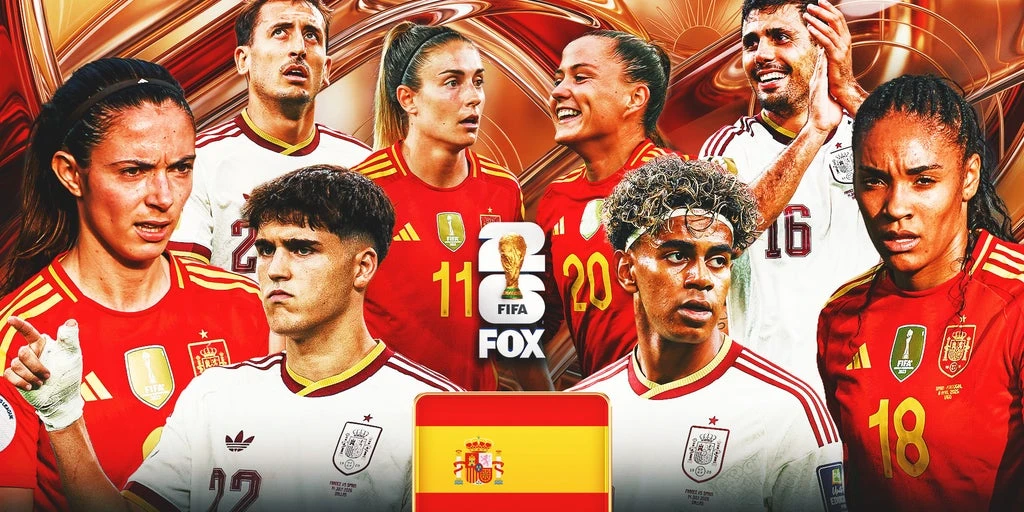
NEW YORK - Spain has the chance to accomplish something no nation has ever achieved. If it defeats Argentina in Sunday’s World Cup final, both its men’s and women’s national teams will simultaneously hold the sport’s biggest trophy.
The women’s side won its first World Cup title in 2023. The men's team enters Sunday's final as the reigning European champion and Olympic gold medalist.
So how did Spain get here? U.S. legend Carli Lloyd points to a unified national philosophy. “This is the only country that starts a philosophy and an identity at a young age,” she said. “They focus on technical excellence first and their positional play.”
The foundation for many players was laid at La Masia, Barcelona’s famed academy. Nine alumni will be on the field for Sunday's final: Lionel Messi for Argentina and several Spanish stars, including Lamine Yamal.
The academy’s legacy extends to the women’s game. It opened its doors to women in 2021 and has already produced stars like Aitana Bonmatí and Alexia Putellas.
The continuity extends to coaches. Manager Luis de la Fuente spent years with Spain’s youth teams before taking the senior job. “I think that was what we do best as Spanish football players is to interpret and read the game,” he said. “And that’s the fruits of our labor in the academies.”
Spain's style has evolved from “tiki taka” to a more progressive, clinical attack. “They’ll kill you with 1,000 passes in possession,” Lloyd noted. If the men win Sunday and the women can go back-to-back at the 2027 World Cup, the beginning of a dynasty will be confirmed.