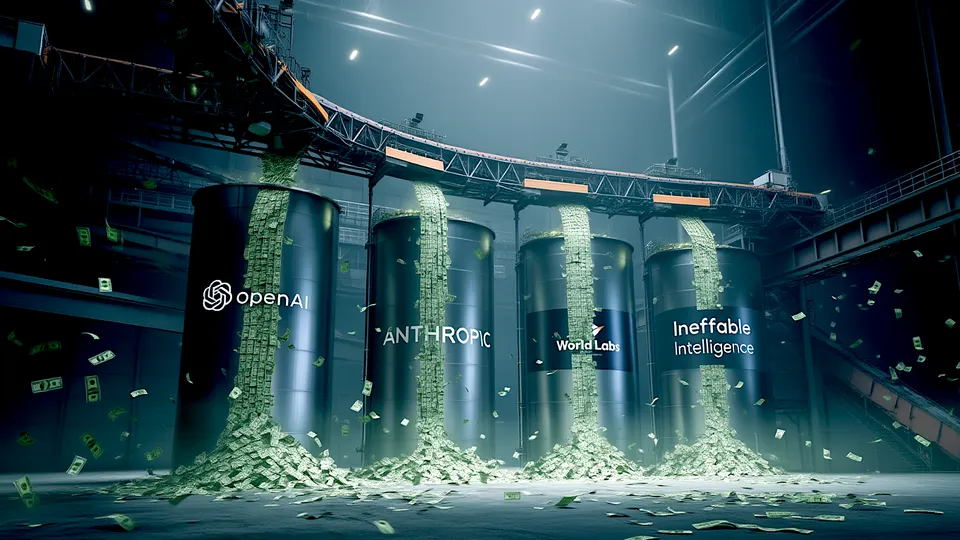
The artificial intelligence sector continues its rapid expansion, marked by significant funding rounds for new ventures and established players alike. Ineffable Intelligence has reportedly secured $1 billion, while Fei-Fei Li's World Labs also closed a $1 billion investment. OpenAI is reportedly in the process of a massive $100 billion raise, valuing the company at $850 billion.
This surge in AI investment is creating a bottleneck, with memory chips emerging as the critical component. This shift signifies a "supercycle" for memory chip manufacturers like Samsung and Micron, as the demand for AI systems outpaces current production capabilities. Nvidia remains a key beneficiary, but the focus is increasingly on the underlying hardware.
Despite the immense capital flowing into AI, some investors are adopting a more cautious approach to certain tech stocks. Meanwhile, companies like Apple appear less integrated into the current AI boom compared to giants like Alphabet and Microsoft.
Developments in AI models continue, with Anthropic releasing a new version of its Sonnet model and securing enterprise deals. However, regulatory scrutiny, such as potential Pentagon actions against Anthropic's military chatbot policies, highlights the complex landscape.
OpenAI has made strategic hires, including the founder of OpenClaw, signaling a push towards autonomous agents. Meta, on its own AI superintelligence trajectory, is investing heavily in next-generation GPUs and CPUs from Nvidia.
The industry is grappling with how to demonstrate tangible returns on AI investments, with a growing emphasis on enterprise ROI. Acquisitions continue, with Palo Alto Networks acquiring Koi for $400 million, underscoring the ongoing consolidation and strategic moves within the tech landscape.
Looking ahead, earnings reports from major tech companies, including Nvidia, Salesforce, and Dell, are expected to provide further insights into the market's dynamics and the persistent demand for AI-related hardware, particularly memory chips.