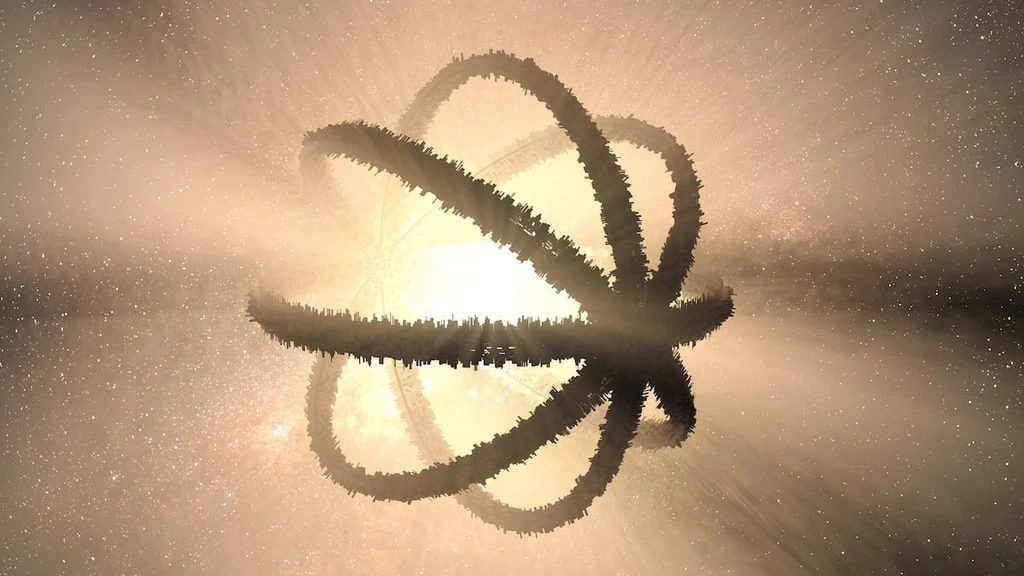
A new analysis suggests that alien megastructures, designed to harvest stellar energy or alter star orbits, could be physically feasible and remain stable for eons.
These immense extraterrestrial constructions might also emit distinct technosignatures, aiding astronomers in the search for advanced civilizations.
The study, by engineering scientist Colin McInnes of the University of Glasgow, details a simplified blueprint for passively stable megastructures like stellar engines and Dyson bubbles.
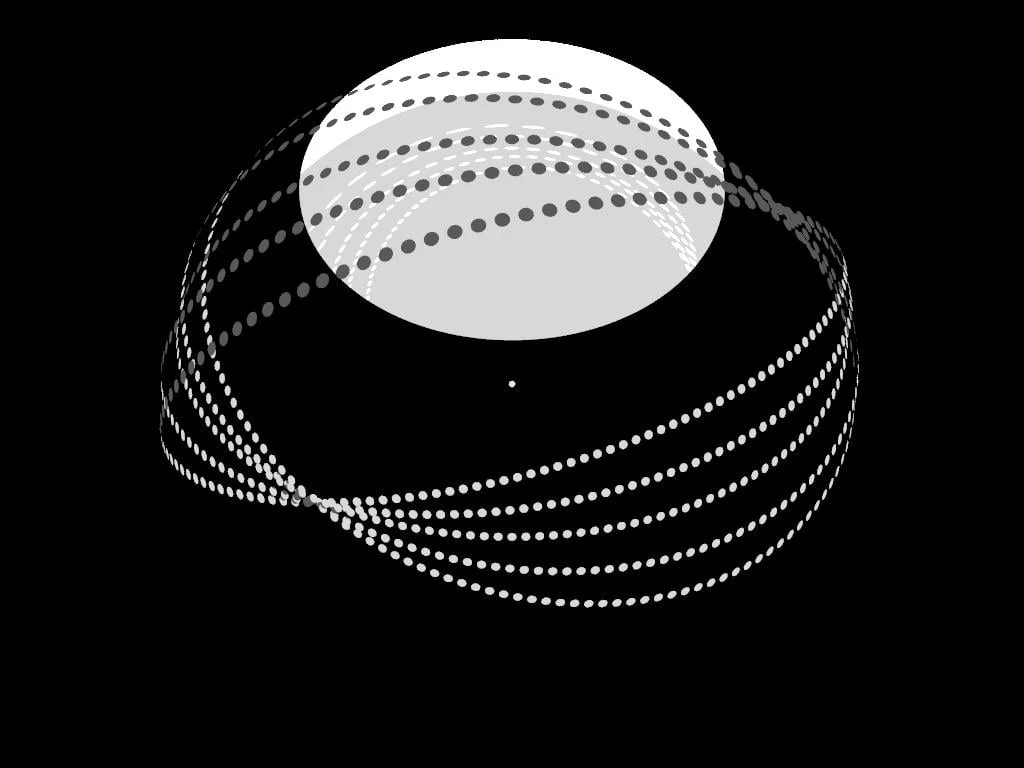
Scientists envision stellar engines as immense, gravitationally coupled structures that use stellar radiation pressure to shift a star's orbit, potentially moving entire solar systems to avoid cosmic catastrophes.
A Dyson bubble, conversely, surrounds a star with a dense swarm of reflectors to capture its light, providing significantly more energy than planetary processes.
McInnes' calculations indicate that while some configurations are inherently unstable, stellar engines can achieve passive stability with a ring supporting most of the mass. Similarly, Dyson bubbles could be stabilized if composed of numerous low-mass reflectors forming a dense cloud.
These findings offer insights into potential technosignatures for SETI studies, as such megastructures could produce detectable infrared excesses or other alterations in a star's spectral fingerprint.