Three years of enterprise AI investment, and most companies are still waiting for the payoff. Boomi believes it has found it, unveiling Boomi Companion, a collection of open-source agent skills that lets developers build, deploy, and test fully configured Boomi solutions through natural language instructions.
The announcement reflects a broader industry shift from AI hype to hands-on value-arriving not through better chatbots, but through tools that let developers build production-ready enterprise software with natural language. As agentic AI moves from experimentation to operational scale, companies that invested in platform-native AI capabilities are pulling ahead of those that waited, according to Matt McLarty, CTO at Boomi.
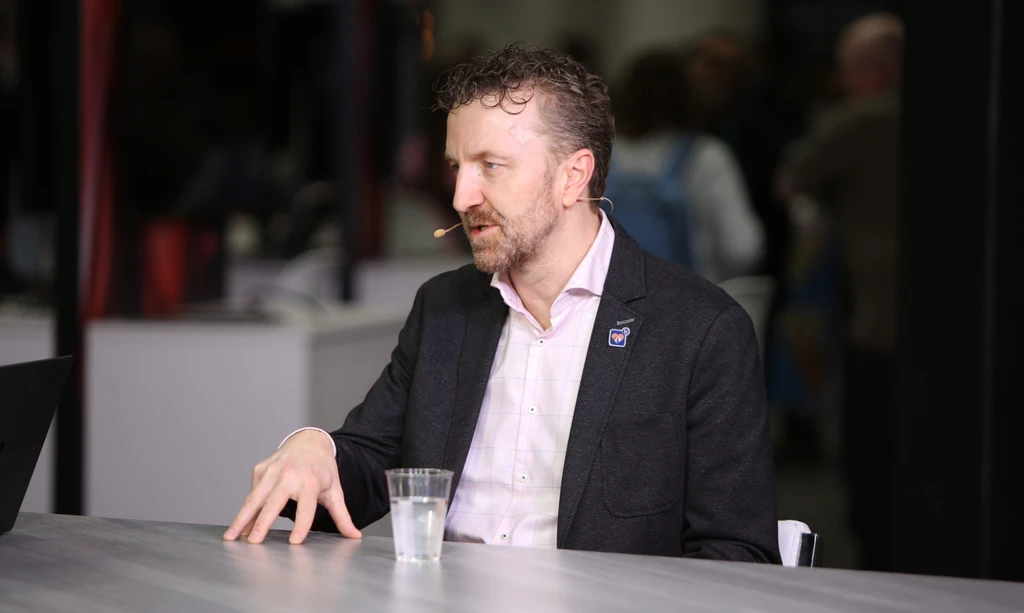
"I think that since ChatGPT exploded, everyone’s been seeing the inevitability of the AI revolution," McLarty said. "But in practice, a lot of enterprises are saying, ‘It’s hype, but I’m not seeing the value yet.’ The agentic engineering space is really more refined than anywhere else yet. This is the payoff."
Boomi Companion, launched at Boomi World 2026, is built on Anthropic’s open standard, allowing any AI coding agent-including Claude Code or OpenAI Codex-to build, deploy, test, and diagnose fully configured Boomi solutions through natural language. "Companion actually builds a fully robust solution," McLarty explained. "It deploys it, tests it, checks results, iterates, learns, talks to the user. It’s almost a little too magical."
The key distinction is between agentic engineering and "vibe coding," a term for hobbyist-style generation that produces brittle output. Companion embeds best practices directly into the agent’s skills, ensuring every solution is structured, scalable, and production-ready.
McLarty also sees Companion as the foundation for a broader architectural rethink. Drawing on Daniel Kahneman's "Thinking Fast and Slow" framework, he says the core challenge is not replacing deterministic processing, but knowing when to augment it with probabilistic reasoning. "Getting the balance right is the biggest architectural challenge that’s going to hit software architecture," he said. "This is a new paradigm-bigger than object-oriented or microservices."