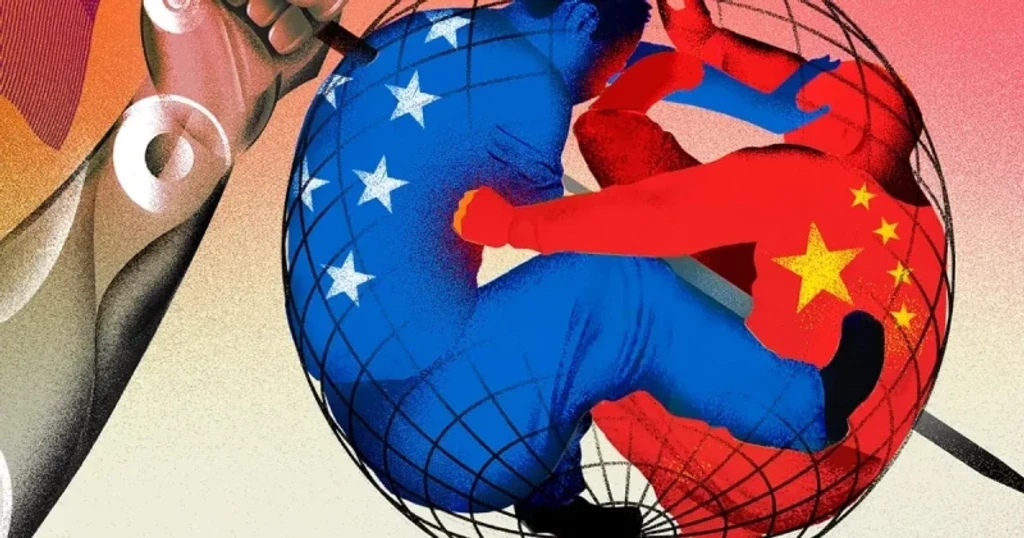
China's generative AI industry has quietly crossed a threshold that should make Silicon Valley uncomfortable. While US companies have focused on demos and waitlists, Chinese firms have moved video generation tools into full commercial operation, generating hundreds of millions in annual revenue from products already used by over half a billion people.
The country's AI industry value has exceeded 500 billion yuan, roughly $72 billion, backed by real usage, not just speculative investment.
ByteDance's Seedance 2.0 generates cinematic 1080p videos from text, images, audio, and video prompts. It outperforms competitors and is integrated into TikTok and Douyin ecosystems with billions of users.
Shengshu Tech launched Vidu Agent to convert images into high-quality videos, collapsing production from days to minutes.
Zhipu AI's GLM-5 model, with 744 billion parameters, is positioned as a step toward GPU independence amid US chip export restrictions.
Meanwhile, many US video generation companies remain in pilot phases, still figuring out how to charge for their products.
Chinese companies like ByteDance and Kuaishou benefit from massive social media and e-commerce ecosystems, creating a data feedback loop. Over 515 million people in China now use generative AI tools.
For investors, most of these companies aren't publicly traded in Western markets. ByteDance remains private; Shengshu Tech and Zhipu AI are venture-backed. Kuaishou trades in Hong Kong with geopolitical risk premiums.
As US-China tensions shape chip access, the narrative around decentralized AI compute alternatives gains traction.