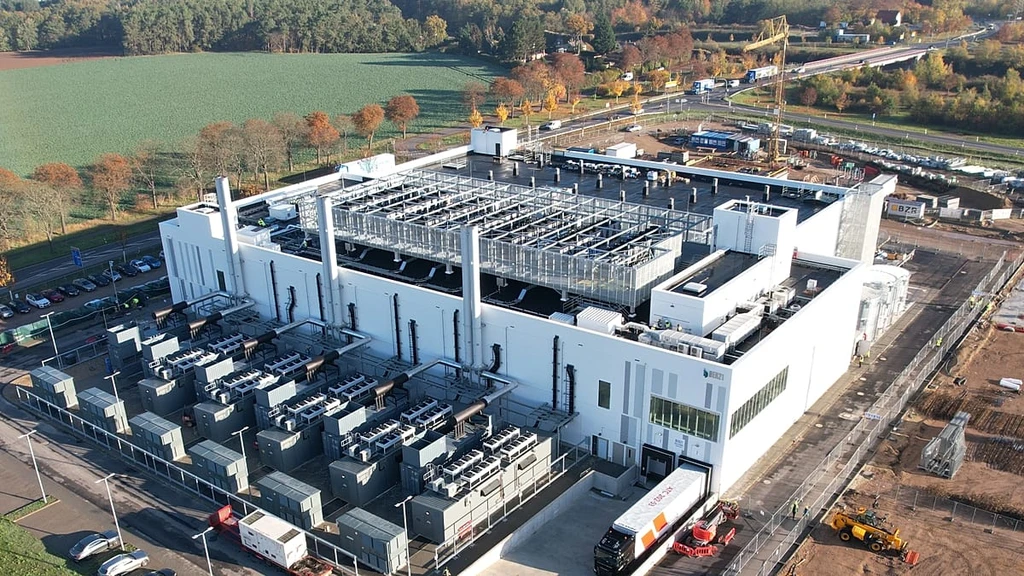
Data centers are essential for artificial intelligence, powering everything from AI chatbots to cloud services. These facilities house servers and equipment for data storage and processing.
The United States leads the world with 5,427 data centers, significantly more than any other nation. This infrastructure is vital for the ongoing AI boom.
Germany and the United Kingdom emerge as leading European countries, with 529 and 523 data centers respectively. Both countries outrank China, which has 449 centers, despite China's technological advancements.
Other countries with substantial data center presence include Canada (337), France (322), Australia (314), and the Netherlands (298).
Collectively, European Union countries host 2,269 data centers, representing 42% of the U.S. total. Including the UK, this figure rises to 51% of the U.S. total, highlighting the U.S. dominance.
Within Europe, Germany, the UK, France, and the Netherlands are central hubs. Italy (168), Spain (144), Poland (144), and Switzerland (121) also host over 100 data centers.
Western Europe leads data center distribution, with Northern Europe playing a smaller but strategic role. Central and Eastern Europe show more fragmented development.
The FLAP-D markets-Frankfurt, London, Amsterdam, Paris, and Dublin-attract the majority of investment and activity due to their connectivity, demand from tech and finance sectors, and stable business environments.
It is important to note that data center counts do not reflect differences in facility size, computing capacity, or utilization. Key factors for data infrastructure investment include reliable energy, broadband connectivity, favorable geography, and political stability.