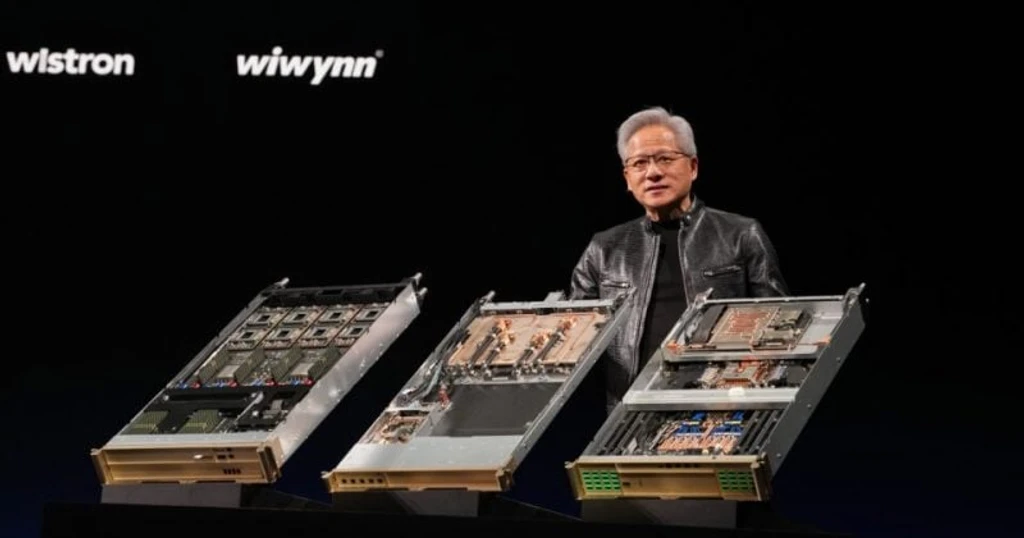
Jensen Huang wants you to stop clicking. During his keynote at GTC Taipei on June 1, the Nvidia CEO declared that the decades-old paradigm of interacting with computers through keyboards, mice, and screens is effectively over, replaced by AI agents that listen, understand, and act on your behalf.
The centerpiece of the announcement is the RTX Spark superchip, developed in partnership with Microsoft, which Huang positioned as the hardware backbone for turning Windows PCs from passive tools into proactive teammates. Instead of opening apps and navigating menus, users will simply state their objectives in plain language and let AI agents handle the rest.
From clicking to conversing
The RTX Spark chip is designed to run AI agents locally on a PC, meaning the conversational interface doesn't rely entirely on cloud processing. Nvidia also introduced its OpenShell runtime and NemoClaw stack, two pieces of infrastructure specifically built for deploying these agentic AI systems securely, particularly in enterprise environments where data sensitivity matters.
Vera Rubin and the economics of inference
Huang also confirmed that Nvidia's Vera Rubin NVL72 rack systems will enter full production by fall 2026. The key number here: a 10x cost reduction in inference compared to previous generations. Reducing that cost by an order of magnitude matters enormously because inference is where the majority of compute spending goes as AI scales from research labs into everyday products.
What this means for investors
The 10x inference cost reduction from the Vera Rubin systems is arguably the more consequential number for markets. Cheaper inference expands the addressable market for AI applications across every industry, meaning more companies can afford to deploy AI at scale, which means more demand for Nvidia's hardware.