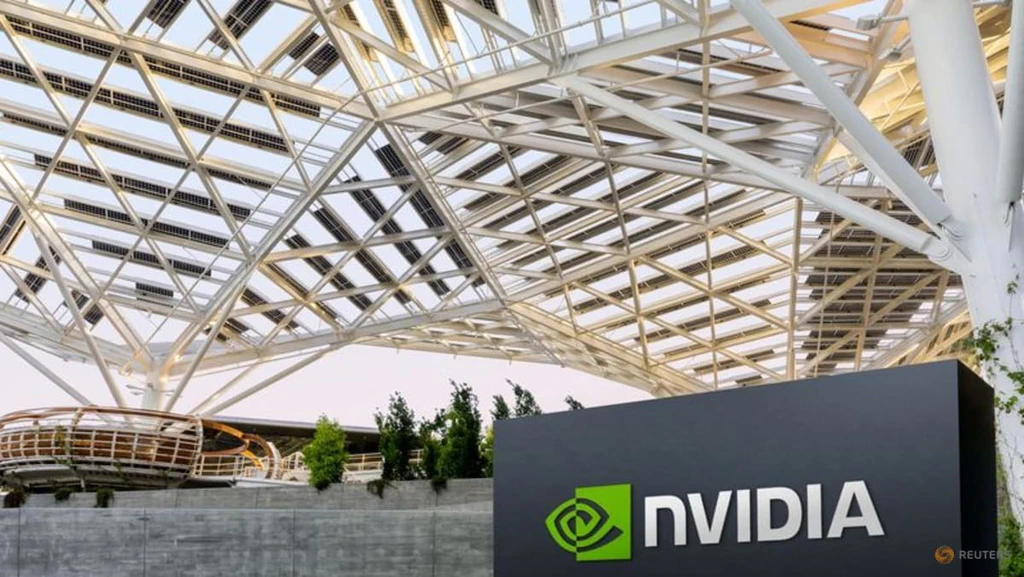
Nvidia CEO Jensen Huang is poised to unveil significant AI advancements and strategic partnerships at the company's annual developer conference, GTC. The event, held in Silicon Valley, is Nvidia's primary platform for showcasing innovations in AI chips, data centers, programming software like CUDA, AI agents, and physical AI robots.
This year's GTC is critical as investors seek proof that Nvidia's substantial reinvestment in the AI ecosystem is yielding results. Analysts anticipate a comprehensive roadmap update, with a focus on inference capabilities, agentic AI, networking solutions, and AI factory infrastructure.
While Nvidia's chips are central to global AI investments, the company faces mounting competition from rival chipmakers and even its own major clients developing proprietary chips. Although the overall AI chip market is projected to grow, Nvidia's market share is expected to gradually decrease as the landscape shifts towards AI agents performing tasks across various applications.
This evolution presents both opportunities and challenges. While increased AI utility is a positive signal, inference tasks can be handled by alternative chip architectures. Major customers like OpenAI and Meta are developing their own custom chips, intensifying competition.
Nvidia is reportedly bolstering its defenses by investing in companies like Groq, specializing in fast and cost-effective inference computing. Plans are in motion to integrate Groq's technology into Nvidia's CUDA platform. Additionally, new server lines combining Groq's chips with Nvidia's networking technology are expected.
The company also faces increasing competition from Central Processing Units (CPUs), championed by Intel and AMD. With the rise of agentic AI, CPUs are becoming crucial for agent orchestration. Nvidia is expected to showcase servers utilizing its own CPUs.
Further strengthening its infrastructure, Nvidia has invested in laser technology firms like Lumentum and Coherent. These investments aim to enhance inter-chip communication via co-packaged optics, a key element for connecting massive AI clusters more efficiently within data centers.