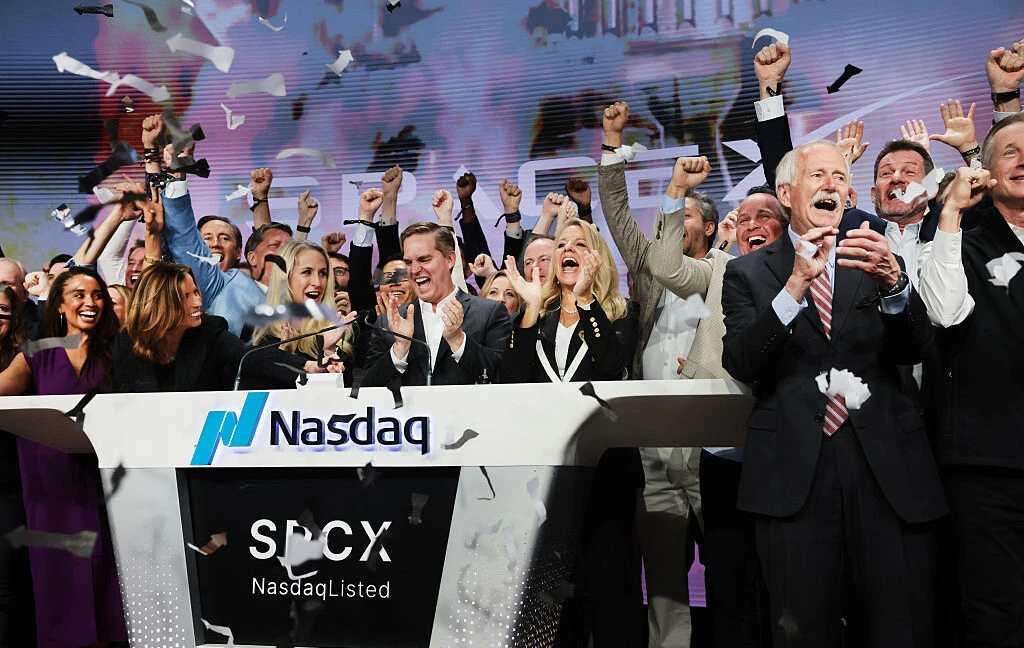
Space Exploration Technologies Corp. officially became a publicly traded entity Friday, listing on the Nasdaq exchange in New York City. The debut valued the company at nearly $1.8 trillion, with shares opening at $135 and closing at $160.95, marking a robust 19 percent gain.
The IPO transformed founder Elon Musk into the world’s first trillionaire, with his stake exceeding $700 billion. The windfall also created thousands of overnight millionaires among current and former employees, rewarding decades of intensive labor.
While SpaceX remains synonymous with Mars colonization and NASA partnerships, its public market narrative has shifted decisively. Regulatory filings reveal that traditional space-enabled solutions and the Starlink constellation account for less than 7 percent of its total addressable market.
Instead, investors are buying into an AI infrastructure play. The company’s primary value proposition now centers on delivering enterprise-grade artificial intelligence services from orbit. This strategic pivot means future capital allocation will prioritize AI development over pure exploration, aligning shareholder expectations with high-margin data services rather than deep-space logistics.