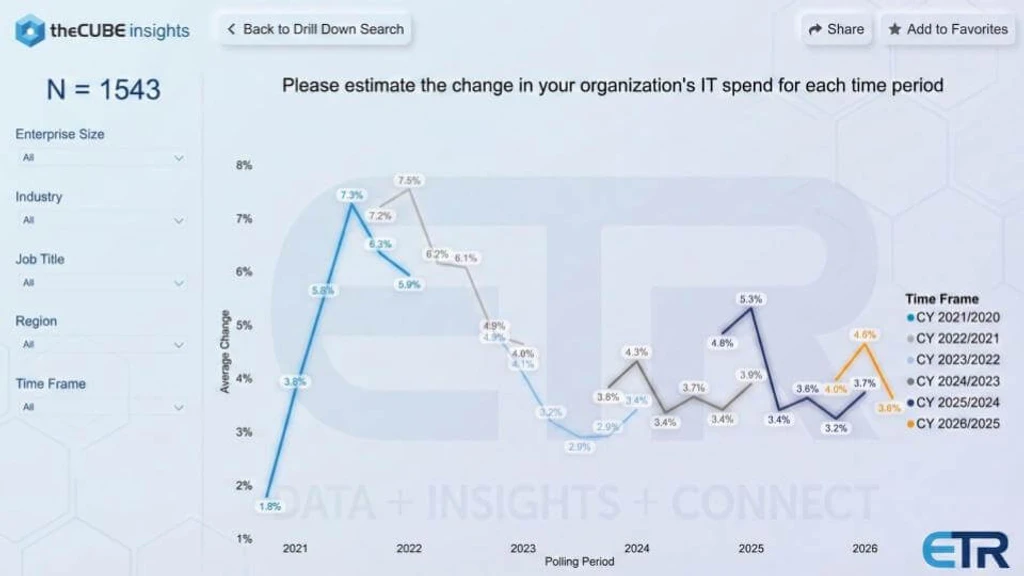
Despite ongoing enthusiasm, mainstream enterprises are tightening budgets and expressing caution. IT spending expectations have whipsawed, recently falling from 4.6% to 3.6% amid geopolitical uncertainty.
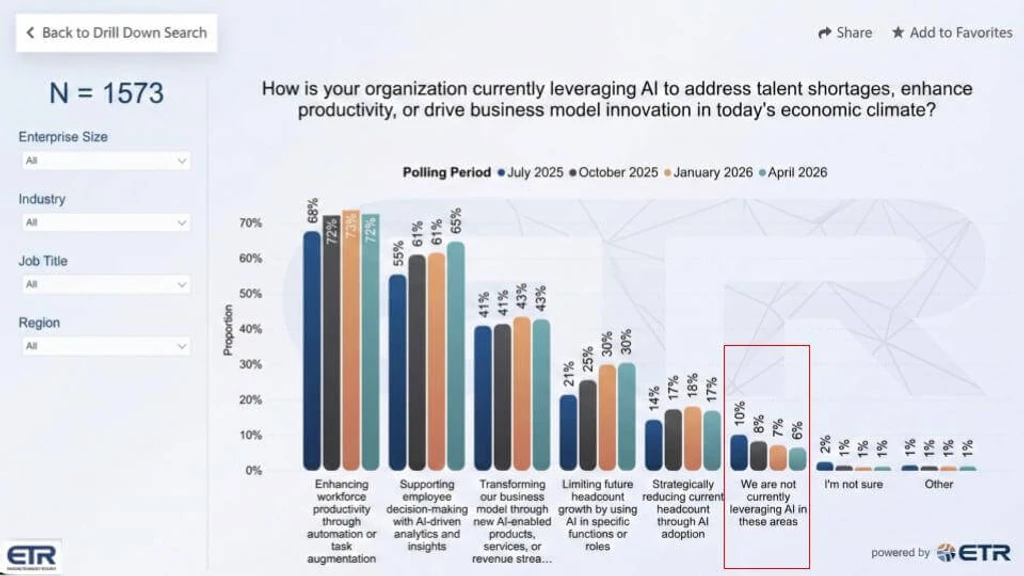
While AI adoption is near-universal, its impact remains limited. Enhancing workforce productivity is the top use case, with decision support gaining momentum. The data shows AI is limiting future headcount growth more than driving immediate reductions.
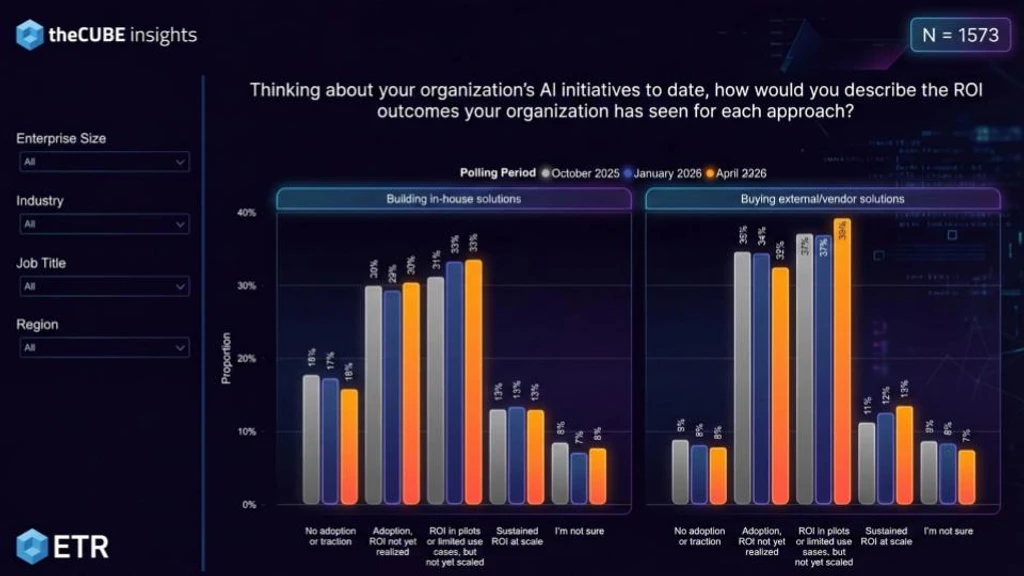
The core challenge is achieving return on investment. Whether building in-house or buying vendor solutions, only 13% of organizations report sustained ROI at scale. The dominant category is ROI in pilots or limited use cases, not yet at industrial scale.
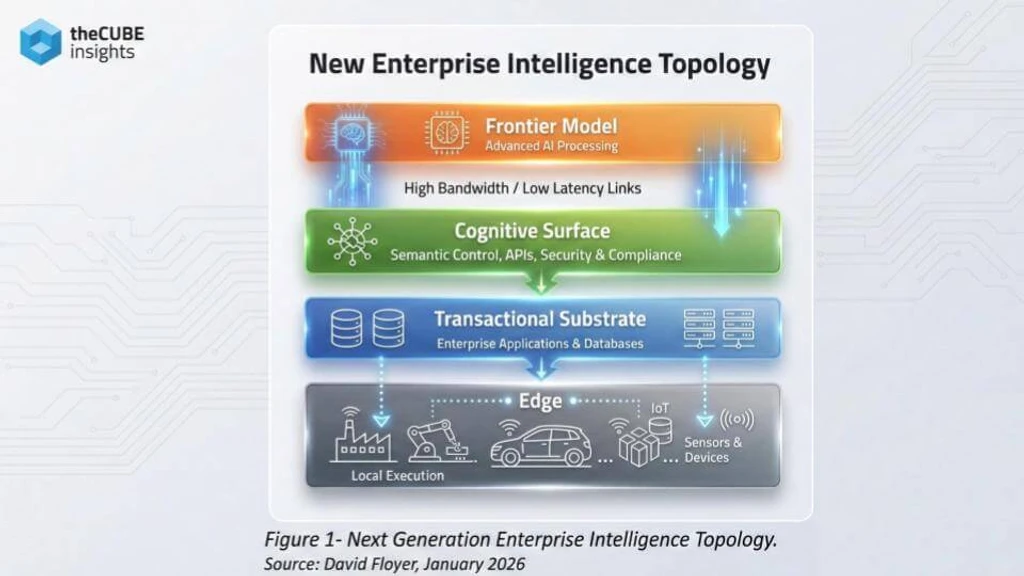
Closing this "agentic gap" requires a new software stack. Enterprises are trying to bolt agentic workflows onto yesterday's architecture, while the industry shifts to an intelligence-centric model built on frontier models, a cognitive surface for governance, and a transactional substrate.
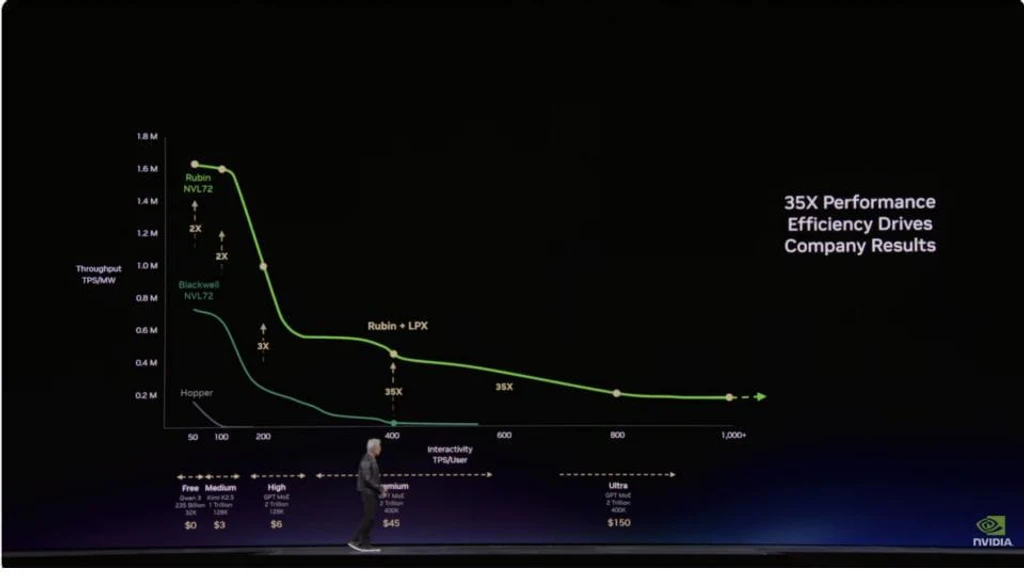
The economic model is also shifting. Nvidia CEO Jensen Huang highlighted a critical curve balancing throughput per energy and interactivity. AI intelligence will be manufactured as tokens, with token spend becoming a core operating discipline akin to cloud costs.
Enterprise adoption is constrained by operational readiness-governance, security, and integration-not by lack of vision. The day is coming when employees manage token budgets to direct revenue-producing agents.