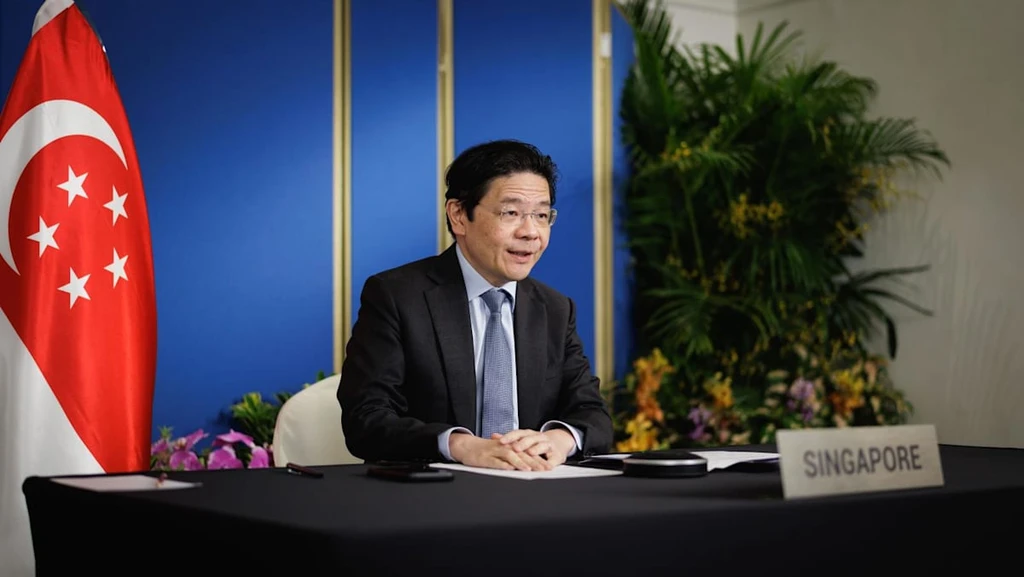
Prime Minister Lawrence Wong declared Friday that allowing any nation to illegally weaponize international waterways establishes a "dangerous precedent." Singapore, situated along the vital Strait of Malacca and Singapore, "feels this acutely," Wong noted, emphasizing that such actions would lead to a more "disorderly and unstable world - one governed by coercion and force rather than rules."
Speaking at a virtual meeting of approximately 40 nations focused on a Middle East ceasefire and maritime security, Wong stressed the international community's vested interest in upholding navigational rights and keeping sea lanes open, secure, and accessible to all. The meeting, hosted by France and the UK, signaled participating countries' readiness to contribute to restoring freedom of navigation in the Strait of Hormuz.
Iran announced the Strait of Hormuz would remain "completely open" following a reported ceasefire, while the U.S. maintained its naval blockade would continue until a war-ending deal is achieved. The Strait of Hormuz, a critical energy chokepoint through which about 20 million barrels of oil and products passed daily in 2025, has been largely closed, disrupting energy supplies and inflating prices.
Singapore advocates for the restoration of safe, predictable, and unimpeded passage through the Strait of Hormuz, aligning with the right of transit passage under the UN Convention on the Law of the Sea (UNCLOS). "Singapore stands ready to do our part and work with partners to restore a free and open Strait of Hormuz, in accordance with international law. That means no tolls, no restrictions and a return to the situation before the war," Wong stated.
Singapore has consistently supported efforts to maintain open sea lanes, advocating at the UN General Assembly and co-sponsoring a UN Security Council Resolution demanding Iran cease actions interfering with maritime trade. As a global trading hub and oil refining center, Singapore maintains a clear and unequivocal position supporting free and open trade, opposing any unnecessary restrictions on trade, energy, and critical supplies.