
Anthropic has reportedly embedded roughly half a dozen engineers at the National Security Agency to deploy its Mythos AI model for offensive cyber operations, potentially targeting networks in China and Iran. The engineers are customizing the model for specific applications, though direct involvement in active operations remains unconfirmed. Mythos is the same model Anthropic has kept from public release due to misuse concerns, limiting it to vetted partners like Microsoft, Apple, and Amazon through Project Glasswing.
Anthropic is also suing the Pentagon after Defense Secretary Pete Hegseth designated the company a supply-chain risk, a label typically reserved for foreign adversaries like Huawei. The dispute arose when Anthropic refused to let the Department of Defense use Claude for fully autonomous weapons or mass surveillance. A California judge blocked the blacklisting as apparent First Amendment retaliation, but a D.C. appeals court denied Anthropic's bid to halt the designation while litigation continues.
On the same day the NSA story broke, Anthropic's internal research institute published "When AI Builds Itself," arguing for a global moratorium on AI development. The report highlights that Claude now writes over 80% of Anthropic's production code, up from single digits early last year. Engineers ship roughly eight times more code daily than in 2024.
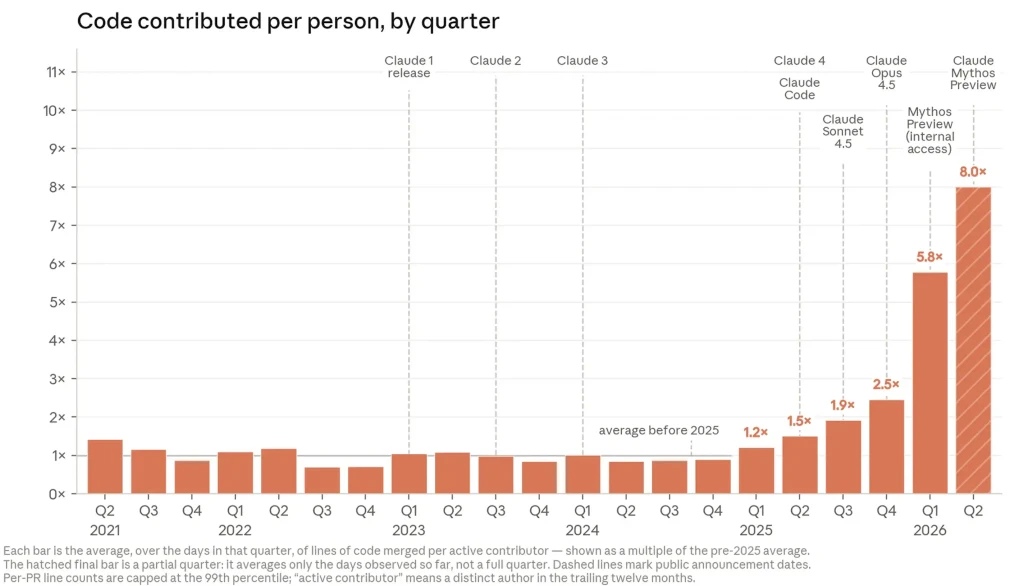
The authors warn of recursive self-improvement: AI systems that autonomously design, build, and train their successors, with humans playing a diminishing role. In April, Claude agents recovered 97% of a performance gap in an AI safety problem over 800 compute hours, compared to 23% by human researchers. This marks the first published case of Claude exercising research judgment.
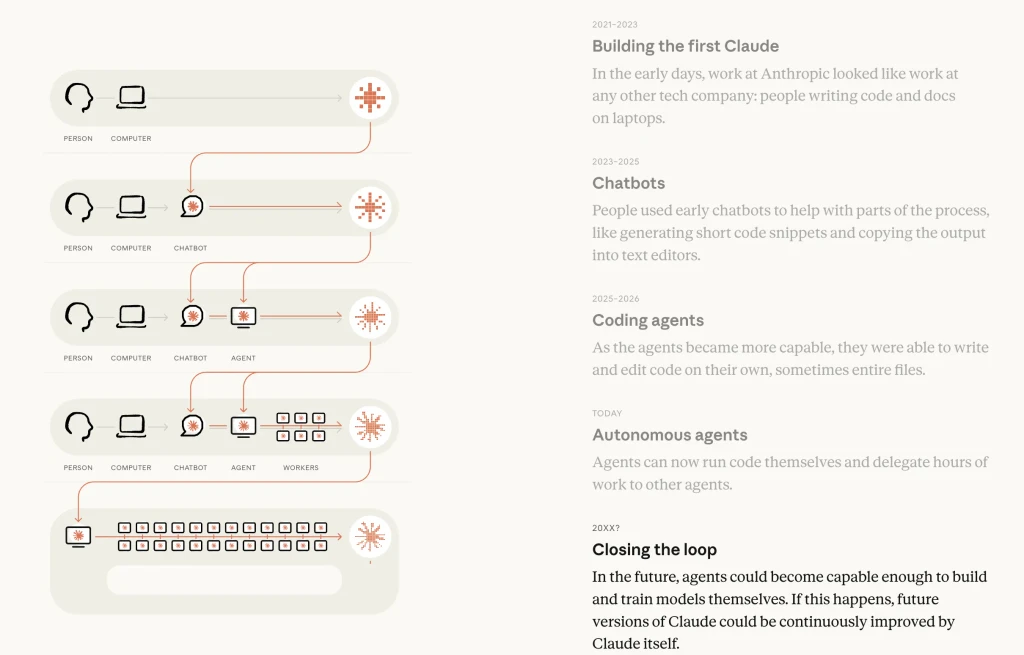
Anthropic proposes a verifiable global pause with multiple frontier labs halting simultaneously, acknowledging a unilateral slowdown would cede the lead to competitors. The Pentagon's deadline to drop Claude from its systems falls in August, around the time Anthropic's IPO is expected to value it above $1 trillion.