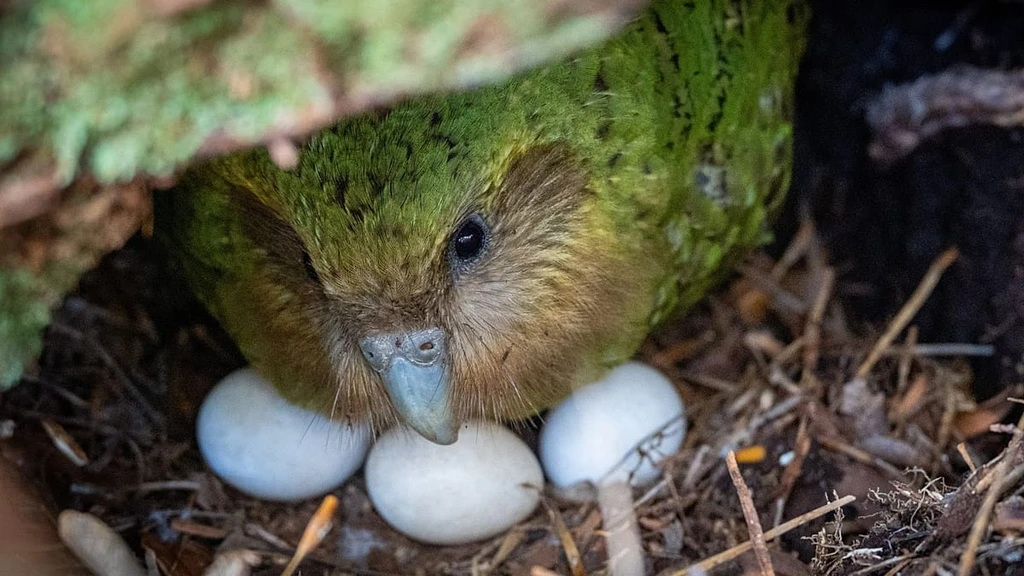
New Zealand's unique kakapo parrot, once teetering on the brink of extinction, is showing remarkable signs of recovery. This flightless bird, known for its heavy build and slow reproduction, has seen its population surge from 50 to over 200 in three decades, thanks to dedicated conservation efforts.
A recent bumper crop of its favorite berries has triggered a rare enthusiasm for mating, with conservationists anticipating a record number of chicks this February. This success brings the kakapo closer to defying its once-certain fate.
The nocturnal kakapo, weighing over 3 kilograms and possessing an owl-like face, lives on three remote, predator-free islands. Its survival has been a complex challenge, exacerbated by the introduction of predators after human arrival in New Zealand and habitat destruction.
Male kakapo attract females by emitting booming sounds from ground-level bowls, a process that occurs only every two to four years when abundant fruit crops are detected. Conservationists meticulously manage the breeding process, ensuring genetic diversity and closely monitoring each bird.
This intensive care, including artificial incubation of eggs and careful relocation, highlights the deep connection New Zealanders feel to their native birds. As Deidre Vercoe, operations manager for the Department of Conservation's kakapo program, states, "It’s a real New Zealand duty to save these birds."