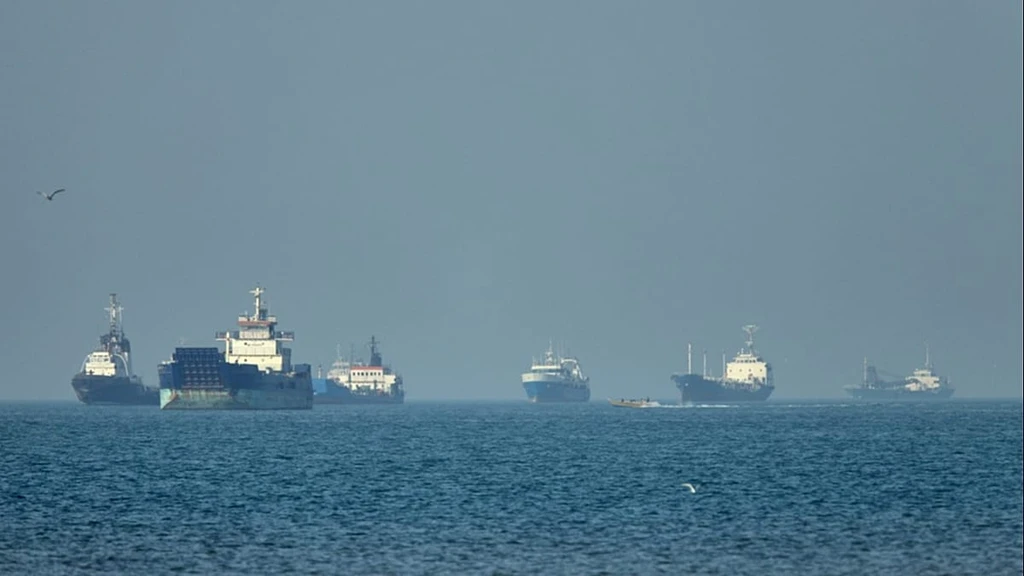
A tenuous ceasefire appeared to be holding Saturday after the United States struck two Iranian oil tankers. Washington awaits Iran's response to its latest proposal to end the war, reopen the Strait of Hormuz, and roll back Tehran's nuclear program.
The US military said its forces disabled two Iranian tankers attempting to breach a naval blockade of Iran's ports. The US Central Command posted video showing an American fighter jet striking the tankers' smokestacks. Earlier, a US jet shot out the rudder of another tanker.
Despite the attacks, President Trump insists the ceasefire is holding. He has reiterated threats to resume full-scale bombing if Iran does not accept an agreement to reopen the strait and meet Washington's demands.
Meanwhile, Bahrain's Interior Ministry arrested 41 people allegedly linked to Iran's Revolutionary Guard (IRGC). The small Gulf kingdom, home to the US Navy's Fifth Fleet, has conducted dozens of such arrests since the war began on February 28. Rights groups say Bahrain is using the conflict to crack down on domestic dissent.
Global diplomacy continues. Russia and Saudi Arabia called for diplomatic efforts to reach a sustainable agreement. Egypt and Qatar also reiterated that diplomacy is the only path forward. Pakistan's Prime Minister Shehbaz Sharif, who facilitated direct US-Iran talks, said his country has been in contact with both sides “day and night” to extend the ceasefire.
In response to the attacks, Iran's Foreign Minister Abbas Araghchi slammed the US, writing on X, “Iranians never bow to pressure.” He also disputed CIA assessments of Iran's missile inventory, claiming readiness at 120% of pre-war levels. Araghchi reiterated Iran's trust in China, saying Tehran looks forward to Beijing supporting a “new post-war regional framework.”