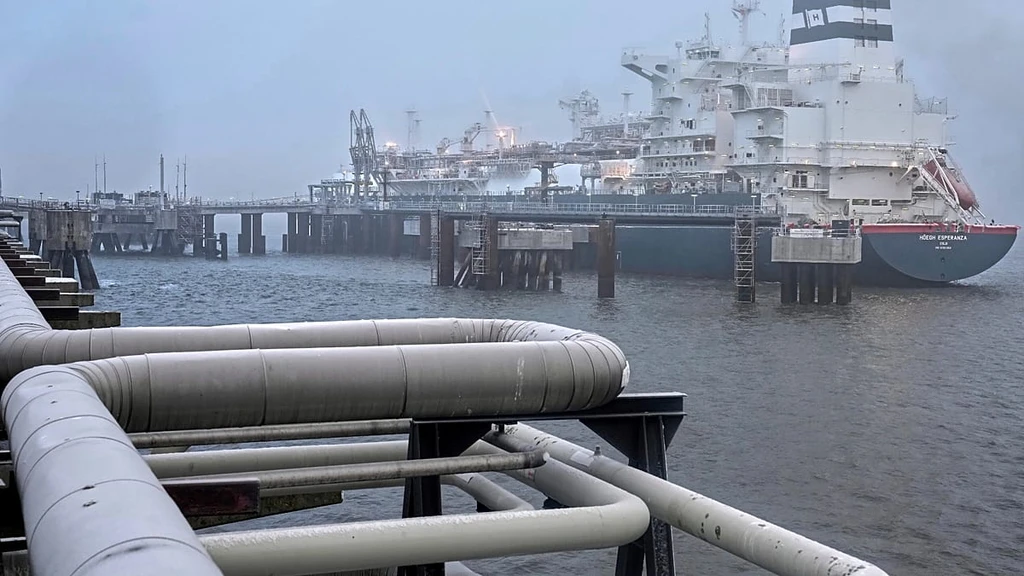
European natural gas prices have surged dramatically, nearing double their previous levels, as US and Israeli actions against Iran rattle global energy markets. Experts warn of immediate fears regarding LNG availability for Europe, triggering a rush in spot markets and increasing risk premiums.
The benchmark Dutch TTF gas contract surpassed €60 per megawatt hour, a sharp rise from its end-of-week position in the low €30s. This situation is highly fluid, with markets factoring in significant uncertainty. Potential price drivers include LNG flows from Qatar, transit through the Strait of Hormuz, and diplomatic resolutions.
For Europe, a renewed energy shock poses a threat to its fragile recovery and supply system. The continent has reduced reliance on Russian pipeline gas since 2022, but its dependence on seaborne LNG and global shipping routes makes it vulnerable to geopolitical flare-ups. Qatar, a key LNG supplier to Europe, further highlights the sensitivity to events in the Gulf region.
Any disruption to the Strait of Hormuz could lead to immediate price spikes in oil and LNG markets, impacting Europe as it competes for flexible cargoes. Higher prices come as Europe enters 2026 with lower gas storage levels than in recent years, with EU storage around 30% full.
Significant increases in retail energy prices could follow if supply constraints persist, potentially impacting household energy bills in the coming months. Sustained prices above €50-60/MWh could lead to notable increases in electricity and heating costs, especially if combined with cold weather or storage refill pressures.
Energy-intensive industries such as chemicals, fertilizers, steel, glass, and paper manufacturing face significant pressure. Countries like Germany, Italy, and the Netherlands could see their competitiveness erode, potentially leading to production cuts. Lower-income households, particularly in Central and Eastern Europe, and those in southern countries reliant on gas for heating, are also vulnerable. Small and medium-sized enterprises may struggle without the hedging capabilities of larger corporations, potentially requiring government support measures.