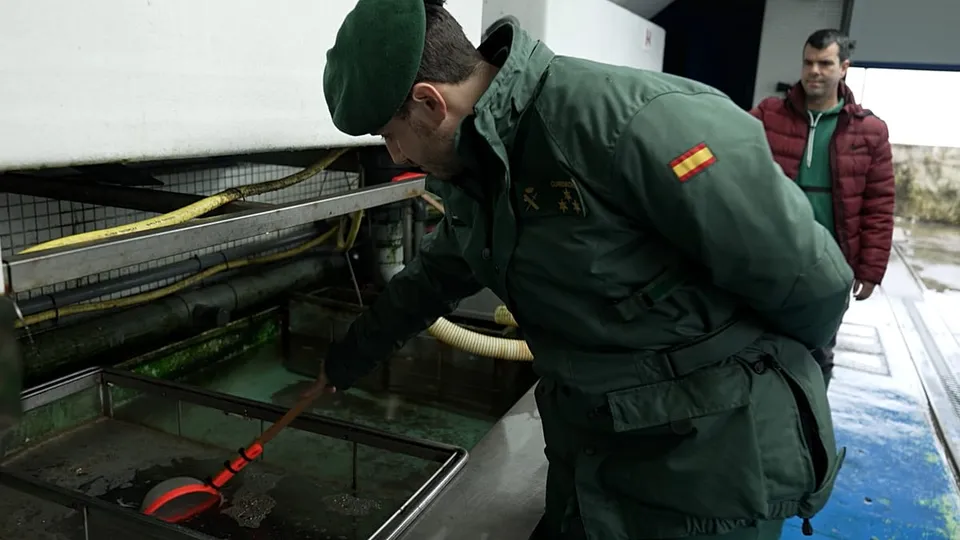
An illicit trade in European eels, estimated to generate up to €3 billion annually, continues to thrive across the continent despite EU export bans enacted in 2009. Organized crime syndicates are exploiting this market, with operation LAKE, launched by Europol in 2015, leading to significant seizures and arrests.
Traffickers use clandestine methods, including concealing juvenile glass eels in suitcases with ice to slow their metabolism for long journeys to Asia. Once there, these eels are farmed to produce fillets for consumption. A kilogram of glass eels can yield over a tonne of adult eels, fetching prices as high as €6,000 per kilogram on the black market.
Customs officers face challenges distinguishing between eel species, especially in juvenile or processed forms. To combat this, private companies and universities are developing rapid DNA testing kits. These kits allow law enforcement to identify species within minutes, providing crucial evidence for prosecution. "DNA technology can also help authorities to take that evidence to court for the offenders to be prosecuted," stated Barend Janse Van Rensburg, Chief of the Enforcement Unit at the CITES Secretariat.
Eel trafficking networks are complex and borderless, involving individuals from various nationalities across fishing, storage, transport, and reception roles. These operations often feature sophisticated money-laundering structures spanning multiple countries. INTERPOL works to map these networks and connect financial sources with destination countries.
The European eel is listed as "Critically Endangered" by the IUCN due to the sharp decline of the Japanese eel, which historically supplied Asian farms. As commercial captive breeding of eels remains unsuccessful, demand for the European species persists.
International cooperation is paramount. Enforcement agencies like Europol and OLAF, alongside global partnerships involving source, transit, and consumer countries, are central to the EU's strategy against wildlife trafficking. Recent forums and CITES resolutions highlight the need for enhanced collaboration to tackle the scale and complexity of these smuggling operations.