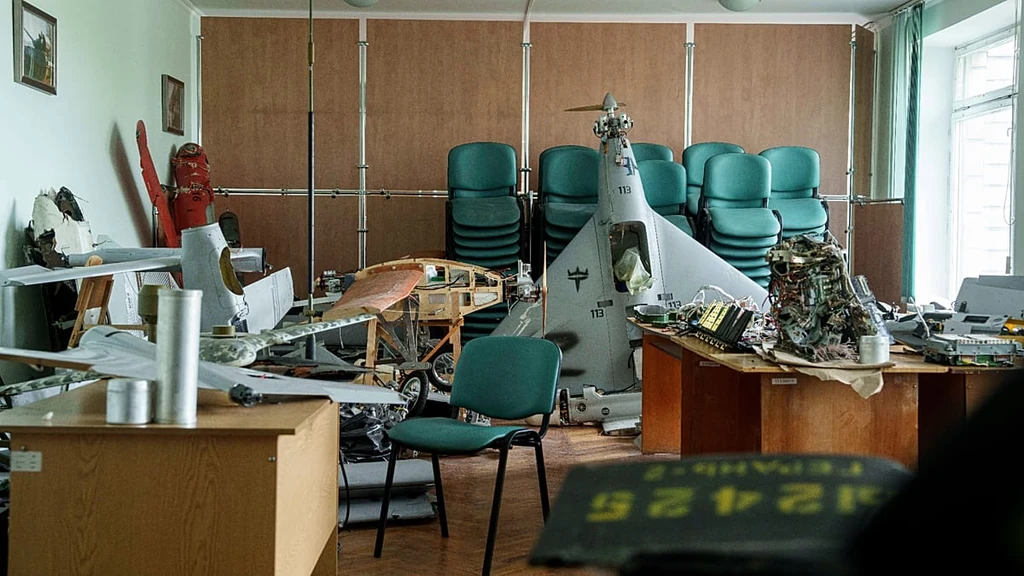
Ukraine's military intelligence reports that hundreds of thousands of German-made components are being incorporated into Russian drones and military equipment, undermining EU sanctions.
The War and Sanctions portal identified 137 components from Germany in Russian weaponry, with 59 specifically found in drones. German transistors, notably from Infineon Technologies, are frequently detected, including in the Geran-5 drone, an upgraded variant. Fuel pumps from German manufacturer Bosch have also been found in Geran-3 and Shahed-136 drones. Both Infineon and Bosch have stated they no longer conduct business with Russia and condemn its actions.
Russia significantly increased its drone attacks in March, launching a record number of Shahed-type drones. The Shahed-136, a kamikaze drone, is used by Russia as the Geran-2. Components from other German firms like TDK Electronics, Würth Elektronik, and Pierburg have also been identified in Russian military vehicles and armored personnel carriers.
Companies highlight the difficulty in tracking products through complex, multi-stage supply chains. Austrian firm ams-OSRAM reported an encoder, manufactured in 2024, was shipped to a Hong Kong company and then to China, eventually ending up in a Russian drone despite a military use prohibition clause. Infineon Technologies emphasizes its "no-Russia clause" and extensive measures to prevent misuse, but acknowledges that tracking products post-sale is challenging.
Bosch suggests some identified fuel pumps may be counterfeits or standard off-the-shelf products not intended for military use. Rheinmetall stated it learned of its automotive spare parts, manufactured in 2020, reaching Russia via customs authorities, not through direct supply. Experts point to fraudulent shell companies within Germany as a method for illegal exports.
Organizations like B4Ukraine are calling for reforms to EU sanctions and export control laws. They cite structural weaknesses, high evidentiary thresholds, and limited due diligence obligations for companies. Proposed reforms include lowering suspicion thresholds for export licenses, mandatory due diligence for exporters, and tighter oversight of sensitive industries to prevent European technology from bolstering Russia's defense capabilities.