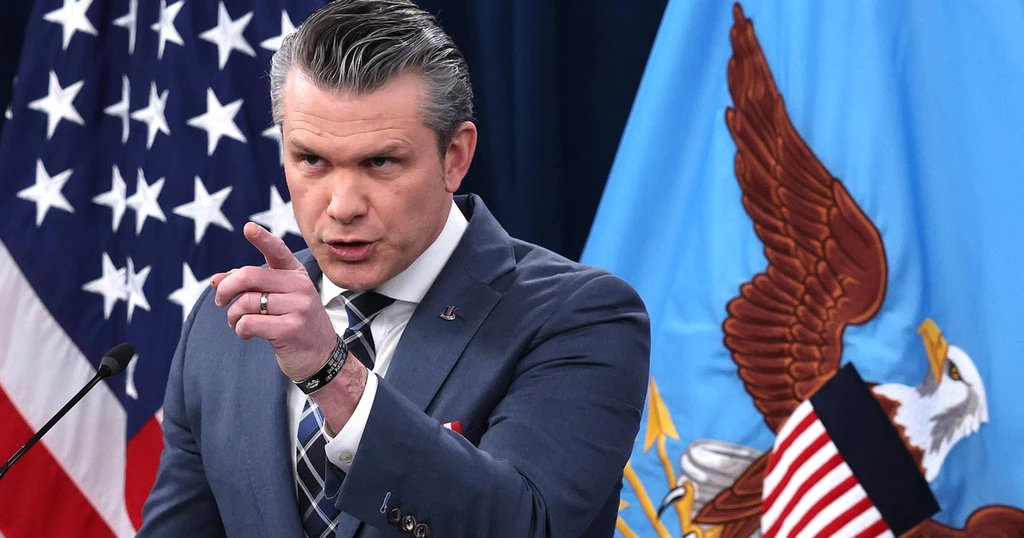
Defense Secretary Pete Hegseth announced Thursday the U.S. will launch its "largest strike package yet" against Iran, following retaliatory attacks across the Middle East after Israel struck Iran's South Pars gas field.
Hegseth confirmed the U.S. has hit over 7,000 Iranian targets, including key military infrastructure. He emphasized the strikes are part of Operation Epic Fury, which he described as decisive and finite-unlike past conflicts in Iraq and Afghanistan.
Joint Chiefs Chairman Dan Caine said the U.S. used 5,000-pound penetrator bombs on underground weapons facilities and is now operating deeper inside Iranian airspace. The U.S. is systematically degrading Iran's industrial base and weapons capacity.
Energy markets surged after Iran attacked Qatar’s Ras Laffan LNG terminal and Israel hit the shared South Pars facility. U.S. crude topped $97 a barrel; Brent crude reached $111.87.
President Trump claimed no prior knowledge of Israel's strike and warned no further attacks on South Pars would be allowed-unless Iran strikes Qatar, in which case the U.S. would "massively blow up" the entire field.
The Pentagon is seeking an additional $200 billion for the war effort. Hegseth did not confirm the figure but stated, "It takes money to kill bad guys."
Despite targeted strikes on senior Iranian leaders, Director of National Intelligence Tulsi Gabbard told Congress the regime remains intact, though largely degraded.
NATO and U.K. officials are discussing ways to reopen the Strait of Hormuz, currently closed to Western vessels, contributing to soaring fuel prices.
Meanwhile, the FBI is investigating former counterterrorism chief Joe Kent for allegedly leaking classified information related to the Iran conflict. Kent resigned earlier this week over administration policy.
Hegseth dismissed comparisons to previous wars: "This is not those wars."