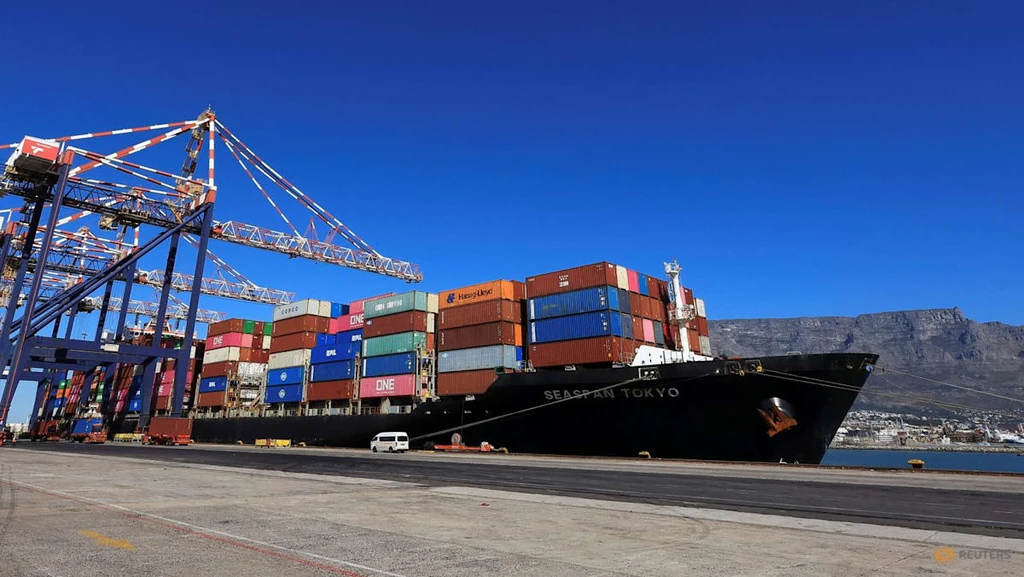
The closure of the Strait of Hormuz, coupled with ongoing Red Sea tensions, is fundamentally redrawing global trade routes, with Africa emerging as a central hub for container ship traffic.
Over the past two months, the blockade has forced shipowners to seek alternative land corridors to deliver food and manufactured goods by truck, as vessels can no longer reach Gulf coastal countries by sea.
The Saudi port of Jeddah on the Red Sea is becoming a new regional hub, where ships from maritime giants MSC, CMA CGM, Maersk, and Cosco arrive via the Suez Canal. Cargo then leaves by truck along a desert highway to destinations such as Sharjah, Bahrain, and Kuwait.
"The port of Jeddah is not at all sized to handle such import volumes and a port congestion situation is emerging," said Arthur Barillas de The, co-founder of freight forwarder Ovrsea.
Meanwhile, the rerouting of Asia-Europe container ships around the Cape of Good Hope, originally prompted by Houthi attacks from Yemen in November 2023, has now become systematic. "Today, 70 percent of the freight traffic that went through the Red Sea in 2023 is being rerouted via the Cape of Good Hope," said Yves Guillo, a supply chain expert at Efeso.
Consequences are stark: Transport times between Asia and Europe have lengthened by an average of two weeks, and costs have risen by 14 percent for a standard 40-foot container compared to last year. Africa's Tanger Med Port Authority handled 11 million standard containers in 2025, an 8.4 percent increase. In contrast, Egypt lost $7 billion in Suez Canal toll revenues in 2024, a drop of more than 60 percent.