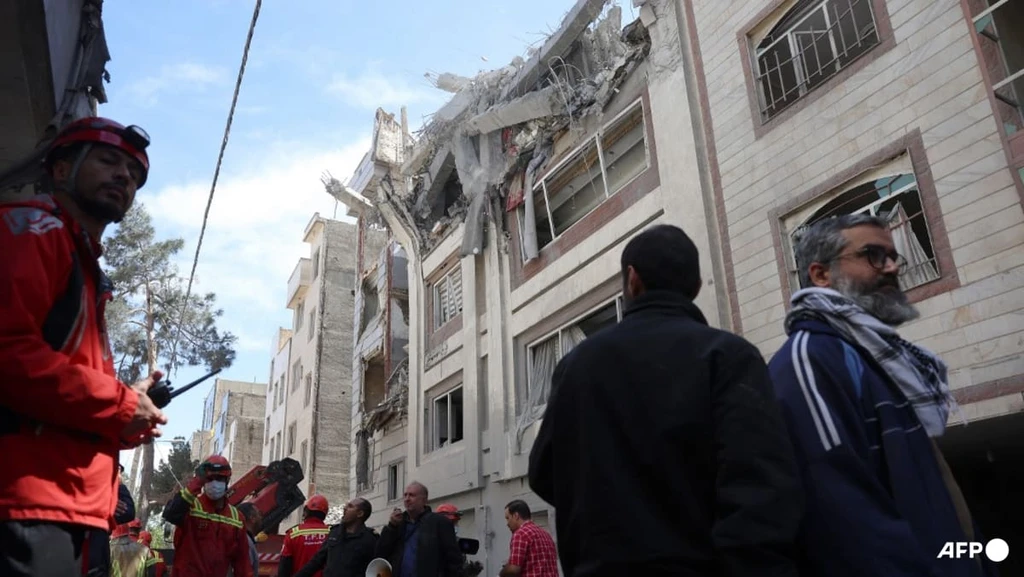
TEHRAN - Iran's Revolutionary Guards warned civilians across the Middle East to stay away from areas near U.S. forces, hours after President Donald Trump claimed talks to end the month-long war were "going well."
Trump extended his deadline for Iran to reopen the Strait of Hormuz-from March 27 to April 6-or face destruction of its energy infrastructure. The strait remains effectively closed, with Iranian forces turning back ships bound for enemy ports.
A month of U.S. and Israeli airstrikes has damaged over 120 cultural sites in Iran, including the UNESCO-listed Golestan Palace. Fresh strikes hit Tehran, Qom, and Urmia overnight.
Iran’s Vice President Esmael Saghab Esfahani threatened to attack Saudi Arabia’s Yanbu port and the UAE’s Fujairah oil complex if foreign troops invade Iranian soil, warning oil could surge past $150 per barrel.
Markets remain volatile. The Bank of Spain cited the war as a cause for projected economic slowdown. At G7 talks in France, European diplomats pressed U.S. Secretary of State Marco Rubio for clarity on Washington’s endgame.
Iran says it has responded to a 15-point U.S. peace plan but demands war reparations, sovereignty recognition over Hormuz, and an end to attacks on its territory and allies like Hezbollah.
Despite diplomatic signals-including rumored direct talks in Pakistan-Israel’s Defense Minister Israel Katz vowed to “intensify and expand” strikes, calling Iranian missile attacks a “war crime.”
Opposition leader Yair Lapid warned Israel’s military is “stretched to the limit,” especially along the Lebanon front.