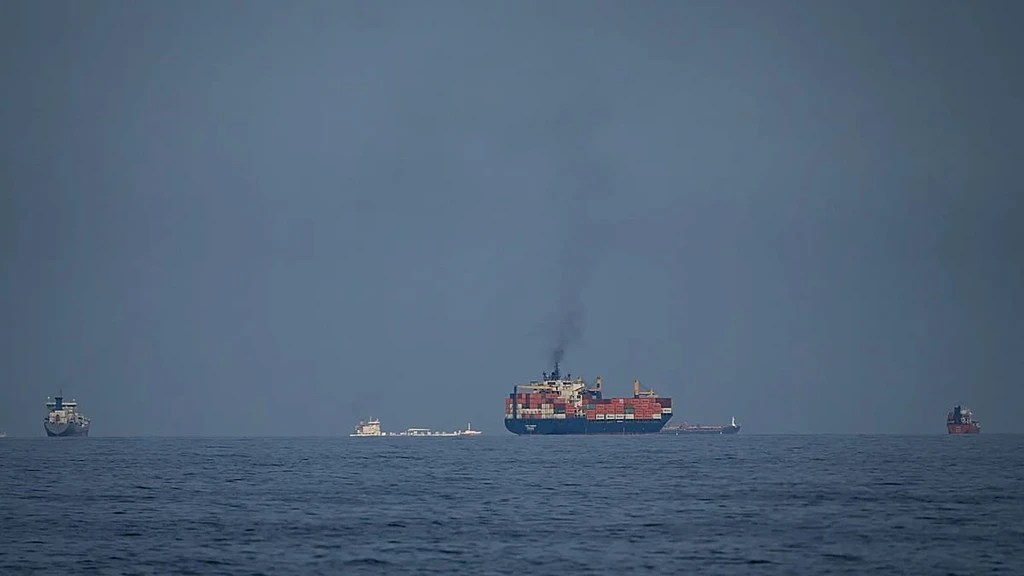
Iran has reportedly closed the Strait of Hormuz, a critical global shipping lane, in response to Israeli attacks on Lebanon. State media announced the closure on Wednesday, despite a two-week ceasefire between Tehran and Washington having just taken effect.
Fars news agency, affiliated with the Islamic Revolutionary Guard Corps (IRGC), stated that while two oil tankers were permitted passage earlier, all traffic has now been stopped. A key component of the recent ceasefire was Iran's agreement to allow shipping through Hormuz, which had previously driven oil and gas prices higher.
US President Donald Trump and Israeli Prime Minister Benjamin Netanyahu asserted that the ceasefire did not extend to Lebanon, a claim disputed by mediator Pakistan.
General Seyed Majid Mousavi of Iran's Revolutionary Guard warned on X that Iranian forces were preparing a "heavy response" to the "aggression towards Lebanon." The renewed violence has jeopardized the "fragile" ceasefire, according to US Vice President JD Vance.
Lebanon's health ministry reported at least 112 fatalities and 837 injuries from Israeli air strikes. The Israeli military described the action as its largest coordinated strike in the ongoing conflict, targeting over 100 Hezbollah sites in Beirut, southern Lebanon, and the Bekaa Valley within ten minutes. They stated they hit missile launchers, command centers, and intelligence infrastructure, accusing Hezbollah of using civilians as human shields. The military urged Lebanon and its civilians to reject Hezbollah's entrenchment in populated areas.